Skip to content

Persistent nausea isn’t a mandatory tax you must pay for a leaner body; it’s a metabolic signal that your current protocol needs a professional adjustment. You’ve likely felt that wave of dread when the bloating hits or worried if semaglutide side effects like “Ozempic face” are an inevitable trade-off for hitting your target weight. It’s frustrating to feel like your progress is stalled by the very treatment meant to set you free. We understand the confusion of wondering whether your symptoms are normal or a sign to stop entirely.
This 2026 clinical guide will empower you to master the reality of these symptoms and show you how expert medical supervision transforms your journey from uncomfortable to unstoppable. You don’t have to white-knuckle your way through gastrointestinal distress to see results. Recent clinical data from August 2026 confirms that while many experience transient nausea, the vast majority of these issues are manageable through precise titration and targeted metabolic support.
We’re providing a clear plan to mitigate nausea, distinguishing between common symptoms and rare risks, and giving you the confidence to continue your fat loss protocol safely. You’ll learn the difference between standard physiological responses and the rare complications that require immediate intervention, ensuring your path to health is both rapid and secure.
Key Takeaways
- Learn to distinguish between transient adjustment symptoms and persistent issues that require a clinical shift in your protocol.
- Master the “Titration Rule” and specific hydration strategies that neutralize semaglutide side effects before they derail your progress.
- Separate clinical facts from internet myths regarding “Ozempic face” and the verified 2026 safety profile of GLP-1 medications.
- Discover how physician-monitored injection therapies and metabolic supplements ensure your fat loss journey remains comfortable and safe.
- Understand how integrating specialized thyroid weight loss protocols can optimize your metabolism while minimizing gastrointestinal distress.
Understanding Semaglutide Side Effects: What is Normal?
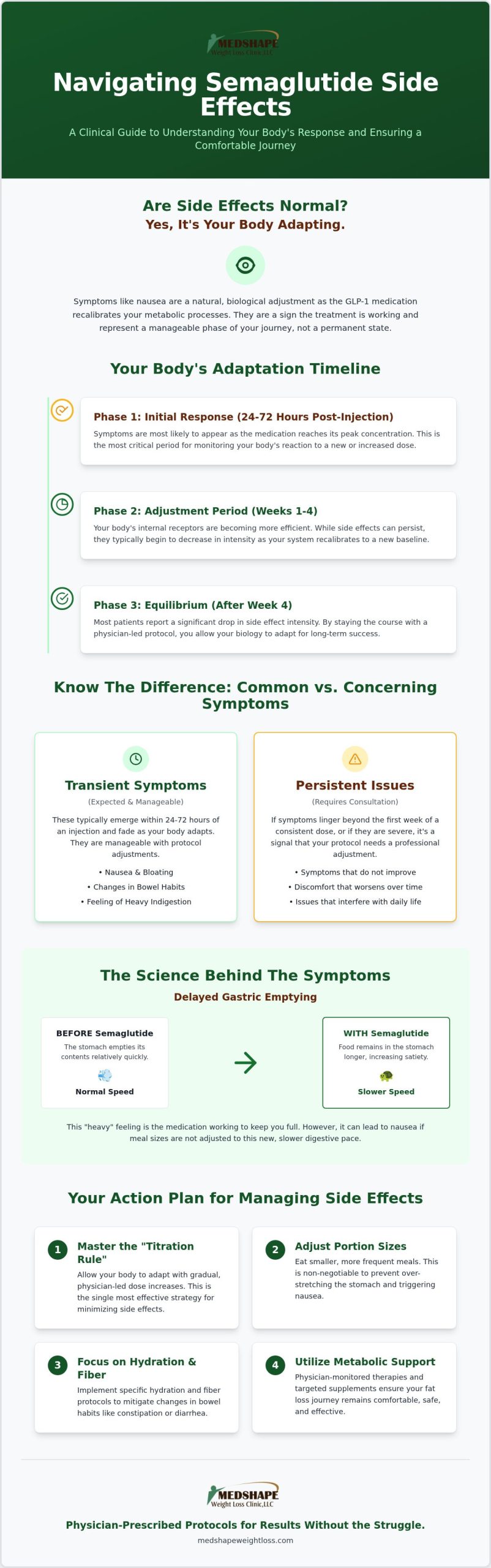
Experiencing semaglutide side effects is not a sign that your body is rejecting the treatment. Instead, these symptoms represent a natural, biological adjustment to a GLP-1 receptor agonist as it recalibrates your metabolic processes. Whether you find information under the correct spelling or through common searches for “semiglutide,” the clinical reality remains the same. The compound is working to mimic a hormone that regulates appetite and insulin. Most patients find that symptoms are strictly dose-dependent; they appear when the dosage increases and fade as the body reaches a state of equilibrium. Professional medical supervision ensures these signals are managed rather than tolerated.
Distinguishing between transient and persistent symptoms is the first step toward a successful protocol. Transient symptoms typically emerge within the first 24 to 72 hours after an injection and dissipate as the medication’s plasma levels stabilize. Persistent issues are those that linger beyond the first week of a specific dose. Understanding the pharmacological profile of Semaglutide on Wikipedia reveals that while the drug is highly effective for weight loss, its impact on the gastrointestinal tract is the primary source of initial discomfort. This is a manageable phase of the journey, not a permanent state of being.
The Most Common GI Symptoms
Nausea is the most frequently reported symptom, largely due to delayed gastric emptying. This process keeps food in your stomach longer to increase satiety, but it can initially feel like heavy indigestion. You must learn to differentiate between the “fullness” signal and actual gastric distress. While your brain is learning to process these new satiety markers, you might experience a temporary mismatch in how you perceive hunger. Additionally, changes in bowel habits like constipation or diarrhea often occur during the first month. These are usually results of the slowed digestive speed and can be mitigated with specific hydration and fiber protocols rather than stopping the medication.
The Timeline of Adaptation
The first 48 hours after a new dose are the most critical for monitoring your reaction. This is when the medication reaches its peak concentration in your system. As you progress through a standard 16 to 20 week protocol, your internal receptors become more efficient at processing the GLP-1 signals. The adjustment period is a definitive sign of metabolic shifting as your endocrine system recalibrates to a new baseline. Most patients report a significant drop in side effect intensity after the third or fourth week of a consistent dose. By staying the course with physician-led titration, you allow your biology the time it needs to turn these early challenges into long-term fat loss success.
The Science of GLP-1 Side Effects: Why Your Body Reacts
Understanding the biological mechanics behind your symptoms is essential for maintaining confidence in your protocol. Semaglutide functions by mimicking the glucagon-like peptide-1 (GLP-1) hormone, which targets specific receptors throughout the body. While this triggers the desired fat loss, it also initiates a series of physiological shifts that your system must process. These semaglutide side effects are the result of the medication interacting with your digestive tract, brain, and endocrine system simultaneously. With the March 2026 FDA approval of higher-dose Wegovy HD (7.2 mg), understanding these dose-dependent reactions is more relevant than ever. For a deep dive into the clinical data, the Official FDA Prescribing Information provides a comprehensive overview of these interactions.
Delayed Gastric Emptying Explained
The primary driver of digestive discomfort is the slowing of gastric motility. Normally, your stomach empties its contents relatively quickly. Semaglutide extends this duration, ensuring that food remains in the stomach for a longer period. This “heavy” feeling is actually the mechanism that creates sustained satiety, but it can lead to nausea if meal sizes aren’t adjusted. When you consume a large meal, the distention of the stomach wall sends signals to the brain that can be misinterpreted as sickness. Adapting your portion sizes is a non-negotiable step in neutralizing this reaction. Our physician-monitored injection therapies are designed to help you navigate these transitions with personalized guidance.
Neurological Satiety vs. Nausea
Your brain’s hypothalamus is the command center for hunger and reward. Semaglutide crosses the blood-brain barrier to tell this center that you’re satisfied. However, these same receptors are located near the area postrema, the brain’s “nausea center.” If the dosage is introduced too quickly, the signal for satiety can “bleed” into a signal for nausea. This is why hydration is critical. Dehydration can sensitize these neurological pathways, making symptoms feel more intense. Distinguishing between a healthy lack of hunger and a state of feeling ill is a skill you’ll develop as your body adapts.
Beyond the gut and brain, your body is also managing blood sugar stabilization. During the initial weeks, as your insulin sensitivity improves and glucose levels level out, you may experience transient fatigue. This is your metabolism shifting its primary fuel source. While rare, high-risk patients should monitor for specific semaglutide side effects that require professional attention:
- Persistent, severe abdominal pain that radiates to the back.
- Continuous vomiting that prevents adequate hydration.
- Yellowing of the skin or eyes (jaundice).
Slowed digestion can sometimes lead to bile stasis, which is why clinical monitoring is vital for those with a history of gallbladder issues. By understanding these scientific foundations, you can view your symptoms as data points rather than obstacles.
Managing Nausea and Fatigue: Clinical Strategies for Comfort
Mastering your metabolic transition requires more than just willpower; it demands a clinical strategy that prioritizes your physiological comfort. The 0.25mg titration rule is the cornerstone of a safe protocol. Starting at this baseline dosage allows your GLP-1 receptors to desensitize gradually, preventing the overwhelming nausea that often occurs with aggressive dosing. We prioritize this slow and steady approach because your long term success depends on consistency, not just speed. If you skip this step, you risk acute gastric distress that could force you to abandon your progress prematurely.
Hydration is another critical pillar, yet most patients rely solely on plain water. This is a mistake. Because semaglutide alters your fluid balance, you need a specific electrolyte protocol to maintain cellular energy. Sodium, potassium, and magnesium are essential to prevent the headaches and lightheadedness often mistaken for the medication’s direct impact. By integrating high quality electrolytes, you neutralize the most common semaglutide side effects before they impact your daily performance. Managing Semaglutide side effects effectively starts with proactive physiological support rather than reactive symptom management.
Dietary Adjustments for Instant Relief
Eliminating high fat and fried foods is the fastest way to stop sulfur burps and indigestion. When fatty foods sit in a slowed digestive tract, they ferment, leading to gas and discomfort. You must practice mindful, slow eating to respect your new satiety signals and avoid over filling your stomach. We recommend consuming 80-100g of protein daily to maintain muscle and reduce fatigue while keeping your blood sugar stable. This protein buffer acts as a metabolic stabilizer, ensuring your body burns fat while preserving lean tissue.
Lifestyle Hacks for Energy
Managing the “Semaglutide Slump” often requires B-vitamin synergy to support mitochondrial function. These vitamins can be integrated through specialized injections to boost metabolic energy and clear neurological fog. Additionally, a simple ten minute walk after meals improves gastric motility and reduces bloating. This physical movement assists your body in processing food more efficiently, turning a potential side effect into a manageable part of your routine. Timing your injections can also change your experience; many patients prefer night time administration to sleep through the initial peak of the medication.
Rare Risks and Myths: Navigating the 2026 Safety Profile
Safety concerns often stem from a lack of clinical context. The “Black Box” warning regarding medullary thyroid carcinoma is a primary example of how fear-mongering can overshadow medical reality. While this warning is a regulatory requirement based on rodent studies, clinical data as of August 2026 continues to show that these risks are exceptionally rare in human populations. We ensure your safety by strictly adhering to contraindication guidelines, particularly for those with a personal or family history of specific thyroid conditions. Understanding the actual prevalence of semaglutide side effects allows you to focus on your transformation without unnecessary anxiety.
Debunking the ‘Ozempic Face’ Myth
The term “Ozempic Face” is a misnomer that attributes a natural biological process to the medication itself. Facial fat loss is an inevitable result of a total body transformation; when you lose significant weight rapidly, the subcutaneous fat that provides facial volume diminishes. This isn’t a drug toxicity issue. To maintain skin elasticity, we emphasize a protocol rich in high quality protein and specific anti-aging peptides. Our medical supervision prevents a “gaunt” appearance by ensuring your weight loss is controlled and supported by proper nutrition.
Rapid fat loss also places specific demands on the gallbladder. When the body metabolizes fat quickly, it increases the concentration of cholesterol in bile, which can lead to gallstones. This is why physician monitoring is non-negotiable. We track your metabolic markers through regular blood work to ensure your organ function remains optimal throughout your journey. Our direct pay model allows you to access this high level professional supervision without the delays or hurdles associated with insurance based billing.
When to Contact Your Physician
You must distinguish between the manageable nausea discussed in previous sections and “red flag” symptoms that require immediate intervention. Severe, persistent abdominal pain that radiates to your back is a potential indicator of pancreatitis, a rare but serious condition. While most semaglutide side effects are transient and dose dependent, your safety depends on professional oversight. Red flag symptoms that require immediate medical attention include severe vomiting that prevents hydration, yellowing of the skin or eyes, or intense localized pain that does not subside.
If you are ready for a professional, results driven approach that prioritizes your safety, explore our Semaglutide Packages to start your journey with expert guidance. We provide the clinical structure you need to achieve your goals without compromising your health or well being.
The MedShape Advantage: Results Without the Struggle
Success in medical weight loss isn’t just about the medication; it’s about the clinical infrastructure supporting it. While many platforms offer a “one size fits all” script, MedShape Weight Loss provides a physician led titration process that prioritizes your comfort and safety. We understand that semaglutide side effects are often the result of improper dosing or a lack of metabolic support. By working with a results driven partner, you move past the discomfort and focus on rapid transformation. Our 20 years of medical weight loss leadership allow us to anticipate your body’s needs before symptoms become obstacles.
Our direct pay model is a strategic advantage for patients who demand efficiency. Unlike insurance based billing, which often leads to delays and pharmacy shortages, our model ensures you never miss a dose. Consistency is vital for maintaining the steady plasma levels required to minimize semaglutide side effects. We also integrate specialized Weight Loss Supplements that are specifically formulated to support digestion and metabolic health. These protocols don’t just mask symptoms; they optimize your biology for peak performance.
Personalized Metabolic Protocols
Beyond the injection, we analyze your unique hormonal barriers to identify why past attempts failed. Many patients struggle with underlying issues that complicate their journey, which is why our Thyroid Weight Loss protocols are essential for long term success. Integrating thyroid support ensures your metabolism is firing correctly, preventing the sluggishness often associated with GLP-1 treatments. We customize your dose based on your specific side effect profile, ensuring that your fat loss remains aggressive while your daily life remains uninterrupted.
Start Your Supervised Journey Today
Your first consultation at MedShape Weight Loss is a comprehensive evaluation of your goals and health history. You’ll receive a professional roadmap that details exactly how we’ll navigate your titration and support your metabolic health. We offer results oriented packages across the country, providing the same high performance care regardless of your location. Don’t let the fear of discomfort hold you back from the body you deserve. Schedule your consultation and master your metabolic health today.
Master Your Metabolic Transformation
Managing semaglutide side effects is not a matter of endurance; it’s a matter of clinical precision. You now understand that nausea and fatigue are manageable metabolic signals that respond to proper titration and physiological support. By distinguishing between transient adjustments and rare risks, you can move forward with the confidence required for a total body reset. The path to your target weight should be defined by consistent progress, not by the struggle of unmanaged symptoms.
MedShape has been at the forefront of physician-led weight loss protocols since 2004. We specialize in customized titration and integrated thyroid weight loss support to ensure your metabolism is optimized from day one. Our results-driven approach removes the guesswork and provides the expert supervision necessary for a safe, rapid transformation. Don’t let manageable hurdles delay your success any longer. It’s time to partner with an innovator that prioritizes your comfort as much as your results.
Start Your Medically Supervised Semaglutide Protocol and secure your professional path to health today. Your evolution into a leaner, more energetic version of yourself is waiting.
Frequently Asked Questions
How long do semaglutide side effects typically last?
Most symptoms are transient and subside within the first 72 hours following an injection. As your body adapts over a 16 to 20 week protocol, the frequency and intensity of these reactions decrease significantly. Persistent issues usually indicate a need for dose titration adjustment or dietary refinement under professional supervision. Our goal is to ensure your transition is as seamless as possible.
Can I take anti-nausea medication with my semaglutide injection?
Yes, you can use over the counter or prescription anti-emetics to manage initial discomfort, though we prioritize physiological adjustments first. While medications like Zofran provide immediate relief, our strategy is to neutralize semaglutide side effects through precise titration and metabolic support. Always consult your medical provider before combining treatments to ensure they align with your specific protocol.
Why am I so tired after my semaglutide dose?
Fatigue is often a byproduct of your body shifting its primary fuel source and stabilizing blood sugar levels. This transient slump usually occurs as your insulin sensitivity improves and your caloric intake decreases. We often recommend B-vitamin synergy or specialized injections to boost mitochondrial energy. This ensures you maintain a high performance lifestyle during this vital metabolic transition.
Will semaglutide cause permanent damage to my stomach?
No clinical evidence suggests that semaglutide causes permanent structural damage to the stomach when used under medical supervision. The slowing of gastric emptying is a temporary pharmacological effect that reverses once the medication is discontinued. Professional monitoring ensures that your digestive system remains healthy while you achieve your fat loss goals. We prioritize your long term wellness above all else.
Is nausea a sign that the medication is working?
Nausea is a common physiological response, but it is not a required indicator of the medication’s efficacy. You can experience significant fat loss without feeling ill if your titration and nutrition are managed correctly. If you feel sick, it’s a signal that your gastric emptying has slowed significantly. This means your meal portions or timing need immediate adjustment to better suit your body’s new pace.
How can I avoid ‘Semaglutide Face’ while losing weight?
You can prevent a gaunt appearance by prioritizing high quality protein intake and maintaining skin elasticity through targeted nutrition. This condition is simply the result of rapid subcutaneous fat loss, not a direct side effect of the drug itself. Our protocols emphasize a controlled rate of loss and the use of anti-aging peptides to preserve your facial volume and youthful contour.
Does everyone get side effects on GLP-1 medications?
Not every patient experiences semaglutide side effects, as individual sensitivity to GLP-1 receptor agonists varies widely. Some individuals transition through the entire protocol with zero discomfort, while others require more time to reach maintenance doses. Your experience depends heavily on your baseline metabolic health and the precision of your physician led titration plan. We customize every journey to minimize these risks.
What should I do if I experience severe constipation?
Increase your intake of soluble fiber and magnesium rich electrolytes immediately to assist with gastric motility. Because the medication slows the digestive tract, staying ahead of hydration is non-negotiable for bowel health. If symptoms persist, we integrate specialized supplements into your protocol. This ensures your digestive system remains efficient and comfortable throughout your entire weight loss journey.