 Skip to content

Table of Contents
- What Long Term Weight Loss Success Actually Means
- Understanding Metabolic Adaptation and Weight Regain
- The Psychology of Weight Loss and Behavioral Barriers
- Sustainable Weight Loss Tips for Daily Life
- How to Prevent Weight Regain After Reaching Your Goal
- Managing Weight Fluctuations and Navigating Setbacks
- The Role of Medical Support and Self-Monitoring
- Conclusion
Last Updated: August 15, 2026
What Long Term Weight Loss Success Actually Means
Long term weight loss success isn’t about reaching a number on the scale and calling it done. It’s about maintaining your weight loss for years, building habits that stick, and understanding that your body will resist change at every turn. Many people lose weight successfully in the short term, weeks or months, but struggle to keep it off once they stop the intense effort.
The real measure of success is whether you can maintain a lower weight while living a life that feels sustainable. That means your eating patterns don’t feel like deprivation, your activity level fits into your actual schedule, and you’re not constantly fighting cravings or hunger. At MedShape Weight Loss Clinics, we define long term weight loss success as achieving your goal weight and maintaining it for at least two years while improving your overall health markers, blood sugar, blood pressure, energy levels, and body composition.
This is fundamentally different from a diet. A diet has an end date. Long term weight loss success requires a shift in how you think about food, movement, and your relationship with your body. You’re not "on" a program; you’re building a new baseline for how you live.
Understanding Metabolic Adaptation and Weight Regain
Your body doesn’t want to lose weight. Metabolic adaptation is the biological reality that makes weight regain so common: as you lose weight, your metabolism slows down to conserve energy. This isn’t a personal failure, it’s physiology. Your body interprets weight loss as a threat and responds by reducing the calories it burns at rest and increasing your hunger signals.
This adaptation happens gradually. In the first few weeks of weight loss, you might burn 300-400 extra calories per day through reduced caloric intake. But as weeks turn into months, your body adjusts. The same caloric deficit that produced rapid results early on may produce nothing at all later. Your hormones shift. Ghrelin (the hunger hormone) increases while leptin (the satiety hormone) decreases. You feel hungrier on fewer calories than you did before.
Weight regain occurs because most people return to their previous eating patterns once they reach their goal. But now their metabolism is slower, their hunger signals are stronger, and their body is fighting harder to regain the weight. This creates a vicious cycle where the weight comes back faster than it came off. Understanding this isn’t about accepting defeat, it’s about recognizing that maintenance requires a different strategy than weight loss.
The key insight: you cannot maintain long term weight loss success using the same approach that got you there. Your body has changed. Your caloric needs have changed. Your strategy must change too.
The Psychology of Weight Loss and Behavioral Barriers
The psychological barriers to long term weight loss success are often more powerful than the physical ones. Your brain is wired to seek reward, and food is one of the most accessible rewards available. When you’re stressed, bored, or tired, your brain remembers that eating feels good, not just because of calories, but because of dopamine, comfort, and distraction.
Behavioral therapy research shows that successful weight loss maintenance depends on intrinsic motivation, doing it because you genuinely want to, not because you feel obligated to. People who maintain their weight loss long-term report that they’ve reframed how they think about food and exercise. They no longer see healthy eating as punishment or exercise as penance. Instead, they’ve built a narrative where these behaviors align with their identity and values.
Common psychological barriers include all-or-nothing thinking (one slip-up ruins everything), emotional eating (using food to manage difficult feelings), and social pressure (friends and family offering food as a way to include you). Many people also struggle with the loss of identity that comes with weight loss. If you’ve been "the heavy person" for decades, losing weight can create an identity crisis. Who are you now? How do you relate to your body?
Successful long term weight loss success requires addressing these psychological components directly. This might mean working with a therapist, joining a support group, or finding an accountability partner who understands the emotional dimensions of weight management.
Sustainable Weight Loss Tips for Daily Life
Building sustainable habits is where long term weight loss success actually happens. These aren’t dramatic changes, they’re small, consistent shifts that compound over months and years.
Nutritional Patterns That Last
The nutritional pattern that works long-term is one you can actually stick to. This is individual. For some people, that’s a lower-carb approach. For others, it’s portion-controlled balanced meals. The research is clear: the best diet is the one you’ll follow consistently.
What matters more than the specific diet is adherence. You need to know roughly how many calories you’re eating, understand which foods trigger overeating, and have a plan for your weak moments. Many people find success with simple rules: eat protein with every meal (it keeps you full longer), fill half your plate with vegetables (volume without calories), and drink water before deciding if you’re actually hungry.
Meal planning removes decision fatigue. When you plan your meals for the week, you’re not deciding what to eat when you’re tired, stressed, or hungry, all situations where poor choices happen. Prep what you can on Sunday, and you’ve removed friction from healthy eating all week.

Physical Activity and Energy Expenditure
Movement is essential for long term weight loss success, but not because exercise burns massive amounts of calories. The biggest benefit of physical activity is that it preserves muscle mass during weight loss. When you lose weight without exercising, you lose both fat and muscle. Muscle is metabolically active, it burns calories at rest. Losing muscle makes it harder to maintain your weight long-term because your baseline calorie burn drops.
The activity pattern that works long-term is one that fits into your life. If you hate the gym, a gym membership won’t help you. If you’re a morning person, early workouts stick. If you’re social, group classes or walking with a friend work better than solo treadmill sessions. Consistency matters far more than intensity.
Most successful people combine resistance training (to preserve muscle) with steady-state cardio (walking, cycling, swimming). You don’t need to train hard. You need to move regularly. Many people find that 150 minutes per week of moderate activity, that’s about 30 minutes, five days a week, is sustainable and effective.
Sleep, Stress, and Hormonal Balance
Sleep deprivation sabotages long term weight loss success more than most people realize. When you don’t sleep enough, your hunger hormones spike and your satiety hormones drop. You crave carbs and sugar. Your willpower depletes. You’re also more likely to eat when you’re not actually hungry, you’re eating to stay awake.
Most adults need 7-9 hours of sleep per night for optimal metabolic function. This isn’t optional if you want to maintain weight loss. Chronic sleep deprivation also increases cortisol (stress hormone), which promotes fat storage, particularly around the midsection.
Stress management is equally important. Chronic stress keeps cortisol elevated, which increases appetite, promotes fat storage, and makes weight maintenance harder. People under constant stress tend to gain weight even when eating the same amount as less-stressed peers. Building stress management into your routine, whether that’s meditation, exercise, time in nature, or therapy, is part of long term weight loss success.
How to Prevent Weight Regain After Reaching Your Goal
The transition from weight loss to weight maintenance is critical and often mishandled. Many people hit their goal weight and immediately relax their efforts. This is a recipe for regain.
Instead, treat maintenance as a new phase with different rules. During weight loss, you might track calories closely and exercise five days a week. During maintenance, you might loosen tracking slightly but keep exercise consistent. The goal is to find the minimum effort required to maintain your weight, not the minimum effort to feel satisfied.
Self-monitoring is one of the most reliable predictors of long term weight loss success. People who regularly weigh themselves, track their food intake, or monitor other metrics (like how their clothes fit) are significantly more likely to catch small gains before they become big problems. A gain of 3-5 pounds is easy to reverse. A gain of 20 pounds is much harder.
Many people also benefit from having a maintenance plan written out before they reach their goal. What will you eat on a typical day? How often will you exercise? What triggers might cause you to overeat, and how will you handle them? Having answers to these questions before you hit your goal weight makes the transition smoother.
Managing Weight Fluctuations and Navigating Setbacks
Weight fluctuates. This is normal. A single day of overeating doesn’t cause weight gain, you’d need to eat 3,500 excess calories to gain one pound of fat. What causes weight regain is a pattern of overeating over weeks and months.
Understanding this prevents the all-or-nothing spiral. You have a bad day, gain 2-3 pounds (mostly water and food volume), panic, and then abandon your efforts because "you’ve failed." In reality, you haven’t failed. You’ve had one day. One day doesn’t define your long term weight loss success.
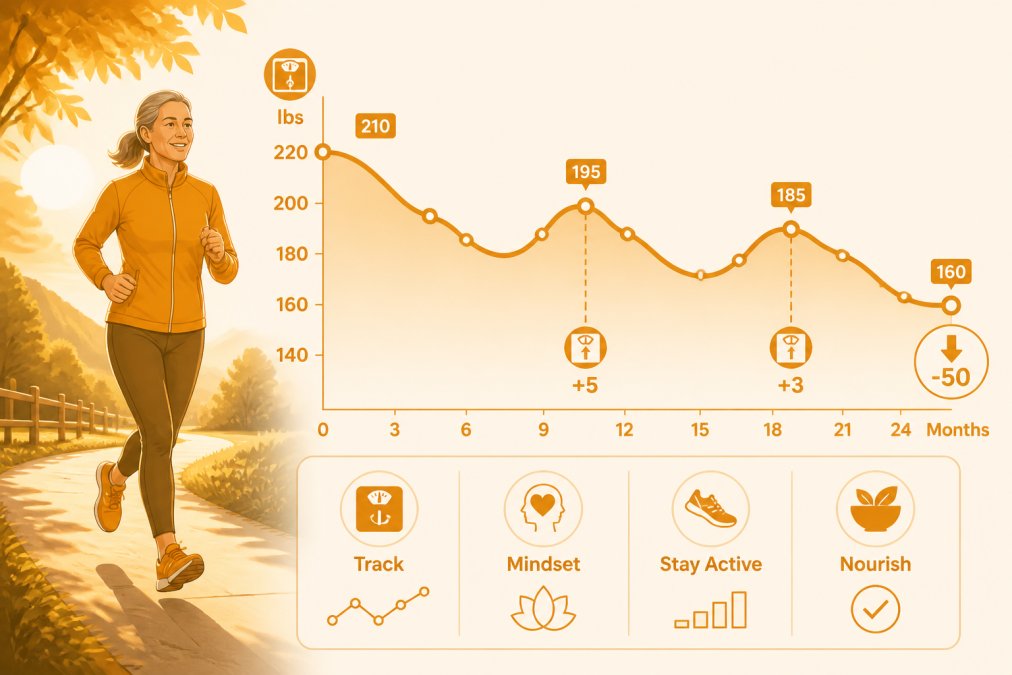
Setbacks happen. You travel and gain weight. You go through a stressful period and turn to comfort food. You get injured and can’t exercise. The difference between people who maintain long term weight loss success and those who regain is how they respond to setbacks. Successful people view setbacks as temporary deviations, not permanent failures. They get back on track quickly, within days, not weeks.
This requires self-compassion. Shame and guilt about weight gain typically trigger more eating, not less. Treating yourself with the same kindness you’d offer a friend who’s struggling makes it easier to get back on track.
The Role of Medical Support and Self-Monitoring
Medical supervision during weight loss and maintenance provides accountability, personalized guidance, and access to tools that work. Working with a physician or registered dietitian removes guesswork. They can identify metabolic issues, adjust your approach based on your individual response, and provide medications or supplements that support your efforts when appropriate.
MedShape Weight Loss Clinics offers medically supervised programs that combine physician oversight with nutrition expertise and, when appropriate, prescription medications like compounded Tirzepatide and Semaglutide. These medications work by regulating appetite hormones, making it easier to maintain a caloric deficit without constant hunger. For many people, especially those with metabolic conditions or a long history of weight cycling, medical support significantly improves outcomes.
The key is choosing a provider focused on long term weight loss success, not just rapid weight loss. A good program teaches you how to eat, move, and think about your body in ways that last. It doesn’t promise a quick fix. It acknowledges that this is a marathon, not a sprint, and provides the tools and support to make it sustainable.
Self-monitoring, whether through regular weigh-ins, progress photos, or how your clothes fit, keeps you accountable and helps you catch small gains before they become big problems. Many successful people check their weight weekly or monthly, not obsessively, but consistently enough to notice trends.
Long term weight loss success is achievable, but it requires understanding the physiology working against you, addressing the psychological barriers that derail most people, and building habits that feel sustainable rather than restrictive. It’s a shift from "going on a diet" to building a life where your weight naturally stays where you want it.
If you’ve struggled with weight cycling or traditional diets haven’t worked, medical support can change the equation. MedShape Weight Loss Clinics provides board-certified physician supervision, customized nutrition plans, and access to compounded medications that regulate appetite hormones, giving you the physiological advantage needed to succeed where willpower alone has failed. Your long term weight loss success is possible when you have the right strategy, support, and tools working together.
Frequently Asked Questions
How can I maintain weight loss long-term after reaching my goal?
Long term weight loss success requires shifting from weight loss mode to weight maintenance mode. This means establishing sustainable eating patterns that provide adequate nutrition without excessive caloric surplus, maintaining consistent physical activity levels, and monitoring your body weight regularly. Most people who succeed track their weight weekly and adjust their nutritional intake or activity if they see weight creeping back up. Building intrinsic motivation and viewing maintenance as a lifestyle rather than a temporary phase significantly improves outcomes.
What role does metabolic adaptation play in weight regain?
Metabolic adaptation is your body's natural response to sustained caloric deficit. As you lose weight, your energy expenditure decreases and hunger hormones increase, making it harder to continue losing weight and easier to regain it. Understanding this physiological reality helps you set realistic expectations. The key is gradual caloric increases as you transition to maintenance, combined with increased physical activity to offset metabolic slowdown. Medical supervision during this transition can help personalize your approach.
What are the main psychological barriers to long-term weight loss success?
The psychology of weight loss involves addressing emotional eating, self-confidence challenges, and intrinsic motivation. Many people struggle with all-or-nothing thinking, where one slip triggers complete abandonment of healthy habits. Social pressures, stress, and past diet failures also create psychological barriers. Successful long-term maintenance requires behavioral therapy strategies like self-monitoring, setting realistic goals, and building a support system. Working with healthcare professionals who understand behavioral change can address these barriers more effectively than dieting alone.
Is sustainable weight loss different from rapid weight loss?
Sustainable weight loss typically occurs at 1-2 pounds per week and focuses on lifestyle modification rather than extreme restriction. While faster weight loss may feel more rewarding initially, research shows that gradual, sustainable approaches lead to better long-term outcomes and improved body composition. Rapid weight loss often involves muscle loss and is harder to maintain psychologically. The most effective approach balances meaningful progress with habits you can maintain indefinitely, supported by adequate nutrition and physical activity.
This article was written using GrandRanker






















Leave A Comment