Skip to content
Table of Contents
- Understanding Tirzepatide: Half-Life and Clearance
- What Is the Half-Life of Tirzepatide?
- How Long Does Tirzepatide Leave Your Body
- Factors That Affect How Long Tirzepatide Stays in Your System
- Compounded Tirzepatide Safety During the Washout Period
- What Happens When You Stop Taking Tirzepatide
- How to Buy Compounded Tirzepatide Online Safely
- Conclusion
- Frequently Asked Questions
Last Updated: September 18, 2026
Understanding Tirzepatide: Half-Life and Clearance
Tirzepatide is a dual GIP and GLP-1 receptor agonist used in medically supervised weight loss programs. Understanding how long does tirzepatide stay in your system is essential for anyone considering treatment, managing discontinuation, or troubleshooting side effects, as its pharmacokinetics directly influence dosing schedules, therapeutic effects, and washout timelines.
Tirzepatide clearance follows predictable patterns based on individual metabolism, renal function, and hepatic capacity. This guide covers the science of elimination, practical timelines, and what to expect during the transition period after discontinuation.
What Is the Half-Life of Tirzepatide?
The half-life of tirzepatide is approximately 5 days. After each weekly injection, your body eliminates roughly half the active drug every five days, meaning 25% remains by day 10 and 12.5% by day 15.
This extended half-life enables once-weekly dosing and consistent appetite suppression, but also means the washout period extends significantly longer than medications with shorter half-lives.
Understanding half-life explains why abrupt dose changes or discontinuation can cause problems. Weekly injections create cumulative effects, with blood concentration rising over 4-5 weeks until steady-state is reached, when weekly injection equals weekly elimination.
How Long Does Tirzepatide Leave Your Body
Knowing how long does tirzepatide stay in your system, complete elimination takes approximately 5 weeks after your final injection, assumes normal renal and hepatic function. Most people achieve 90% clearance within 35 days.
Steady-State Accumulation and Dosing Schedule
Steady-state accumulation occurs after 4-5 weeks of weekly injections, when weekly injection equals weekly elimination. Clinical guidelines recommend waiting at least 4 weeks before increasing dose, as premature escalation can cause unexpectedly high blood concentrations and increased side effects.
Most patients begin at 2.5 mg weekly, increasing to 5 mg after 4 weeks, then 10 mg and potentially 15 mg based on tolerance. Rushing escalations increases nausea, vomiting, and gastrointestinal distress.
Peak plasma concentration occurs 8-11 days after injection, explaining why appetite suppression is strongest mid-week and diminishes toward the next injection.
Factors That Affect How Long Tirzepatide Stays in Your System
Several individual factors influence how quickly your body clears tirzepatide from circulation. Understanding these variables helps explain why two patients on identical doses may experience different washout timelines and side effect profiles.
Renal Function
Your kidneys eliminate a significant portion of tirzepatide. Patients with reduced kidney function (eGFR below 60 mL/min/1.73m²) experience slower clearance and may require dose adjustments. The FDA recommends caution with severe renal impairment (eGFR below 15). Physicians should monitor renal function periodically and adjust treatment accordingly.
Hepatic Clearance
Your liver’s ability to metabolize the drug plays a role, though tirzepatide is less hepatically dependent than some alternatives. Cirrhosis or advanced liver disease may prolong clearance beyond 5 weeks, while mild-to-moderate impairment typically requires no adjustment.
Body Weight and Composition
Higher body mass may affect drug distribution slightly, but tirzepatide dosing does not adjust for weight and clearance timelines remain consistent across typical patients. Those with BMI above 50 should discuss individual expectations with their physician.
Age and Metabolism
Older adults may show slower clearance due to age-related declines in renal and hepatic function, though age alone is not a barrier. Baseline blood work assessing kidney and liver function is essential before starting treatment, regardless of age.
Drug-Drug Interactions During Washout
- Renal elimination: Antibiotics (trimethoprim), antivirals (acyclovir), and cimetidine may slow clearance by competing for kidney elimination pathways, extending the washout period beyond 5 weeks.
- Hepatic metabolism: Drugs inhibiting cytochrome P450 enzymes (ketoconazole, protease inhibitors) may slow clearance; enzyme inducers like rifampin may accelerate it.
- Gastrointestinal effects: Medications slowing gastric emptying (anticholinergics, opioids) can amplify nausea and constipation during washout.
- Diabetes medications: Insulin or sulfonylureas increase hypoglycemia risk with tirzepatide. During washout, diabetes medication doses may need adjustment as tirzepatide’s glucose-lowering effect diminishes.
Your physician should review all medications, supplements, and over-the-counter drugs before starting treatment. Inform your provider of any new medications started during treatment.
Hydration Status and Overall Health
Dehydration reduces renal clearance efficiency, extending tirzepatide’s time in your system. Adequate fluid intake (8-10 glasses daily) supports normal kidney function and predictable elimination. Chronic kidney or liver disease may require dose adjustments or more frequent monitoring.
A qualified physician assesses your clearance profile, adjusts regimens based on health status and medications, and monitors for complications.
Compounded Tirzepatide Safety During the Washout Period
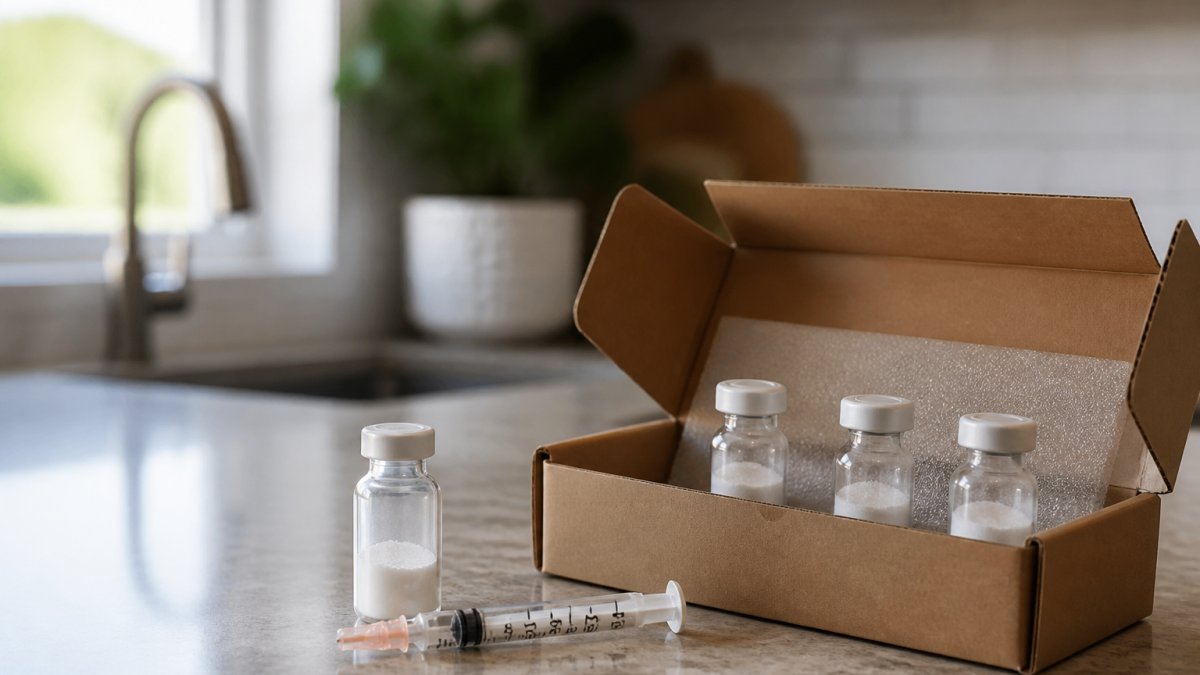
Compounded tirzepatide follows the same pharmacokinetics as brand-name versions, identical half-life and clearance timeline. Quality control varies.
During the 5-week washout period, appetite regulation gradually returns to baseline. Many patients report increased hunger and cravings by week 3-4 as blood concentrations drop below therapeutic levels.
Safety during washout depends on preparation quality.
What Happens When You Stop Taking Tirzepatide
When you discontinue tirzepatide, elimination begins immediately but therapeutic effects persist for weeks due to the extended half-life. By day 7, you retain ~50% of the drug; by day 21, ~12.5%. Complete clearance takes 5 weeks, during which appetite regulation gradually normalizes.

The Physiological Transition
As tirzepatide clears, several metabolic changes occur in sequence:
- Days 1-7: Appetite suppression remains strong; minimal hunger increase.
- Days 8-14: Appetite begins returning as drug levels fall; increased food interest and larger portions feel acceptable.
- Days 15-21: Hunger intensifies noticeably; ghrelin signaling rebounds and cravings increase.
- Days 22-35: Appetite reaches near-baseline by week 5, though psychological cravings may persist longer.
The Psychological Impact of Stopping
Structured Transition Strategies to Prevent Weight Regain
Pre-Discontinuation Phase (2-4 weeks before final injection):
- Establish smaller portions, slower eating, and mindful food choices while appetite suppression is strong.
- Identify trigger foods and plan alternatives for the washout period.
- Increase physical activity to 150 minutes of moderate-intensity aerobic exercise weekly plus 2 days of resistance training (the CDC).
- Schedule nutrition counseling with a registered dietitian to develop a post-discontinuation meal plan.
During Washout (Weeks 1-5 after final injection):
- Track hunger and intake without judgment: Use a food journal or app to log meals, hunger levels, and emotional triggers. This data helps distinguish true hunger from habit or emotion, and provides accountability without shame.
- Implement structured meal timing: Eat at consistent times (e.g., breakfast at 7 a.m., lunch at noon, dinner at 6 p.m., no snacking between meals). Structure reduces decision fatigue and helps prevent grazing as appetite returns.
- Prioritize protein and fiber: These nutrients increase satiety and slow gastric emptying, mimicking some of tirzepatide’s appetite-suppressing effects. Aim for 25-30 grams of protein and 25-35 grams of fiber daily.
- Maintain exercise consistency: Exercise not only burns calories but also improves mood, reduces cravings, and reinforces the behavioral identity shift from “person on weight loss medication” to “person with healthy habits.” Even 30 minutes of daily walking provides meaningful benefit.
- Plan for high-risk moments: Identify specific times or situations when cravings will likely spike (e.g., evenings, social events, stress). Develop specific coping strategies: herbal tea, a walk, calling a friend, or a small planned treat rather than restriction.
Post-Washout Maintenance (Week 6 onward):
- Reassess and adjust: By week 6, tirzepatide has fully cleared. If you’ve maintained weight loss, continue your current eating and exercise patterns. If you’ve regained 3-5 pounds, increase exercise or reduce calories modestly rather than waiting for larger regain.
- Consider behavioral support: Some patients benefit from ongoing coaching, support groups, or therapy to maintain weight loss without medication. Cognitive-behavioral therapy (CBT) specifically addresses the psychological aspects of eating and body image.
- Discuss alternative maintenance options with your physician: If you struggle to maintain weight loss after washout, options include:
- Restarting tirzepatide at a lower maintenance dose (some physicians prescribe 2.5 mg weekly rather than the higher therapeutic doses).
- Transitioning to alternative medications such as semaglutide (Ozempic, Wegovy), phentermine, or naltrexone/bupropion (Contrave), each with different mechanisms and side effect profiles.
- Structured behavioral programs such as Weight Watchers, Noom, or medically supervised programs that combine nutrition, exercise, and behavioral coaching.
Managing Rebound Weight Gain
How to Buy Compounded Tirzepatide Online Safely
Purchasing compounded tirzepatide online carries significant risks if you bypass medical supervision. The market includes legitimate compounding pharmacies operating under state oversight alongside unlicensed operations selling unverified formulations. Safe purchasing requires three non-negotiable steps: verify physician supervision, confirm pharmacy credentials, and request third-party testing documentation.
Conclusion
How long tirzepatide stays in your system, approximately 5 weeks for complete clearance, shapes every aspect of your weight loss journey, from initial dose escalation through discontinuation and maintenance. Understanding the half-life of tirzepatide, the steady-state accumulation process, and individual factors affecting clearance helps you to approach treatment with realistic expectations and informed decision-making.
Frequently Asked Questions
What happens if I stop taking tirzepatide cold turkey?
Stopping tirzepatide abruptly does not cause dangerous withdrawal symptoms, but you may experience rapid changes in appetite and blood sugar levels. Because tirzepatide has a half-life of approximately 5 days, it takes roughly 30-35 days for the medication to fully clear your system. During this washout period, appetite suppression effects fade gradually, which can lead to increased hunger and potential weight regain. Some patients also report mood changes or fatigue as their body adjusts. Consult your physician before stopping to develop a safe discontinuation plan.
How long does it take for tirzepatide to completely leave the body?
Tirzepatide has a half-life of approximately 5 days, meaning half the dose is eliminated every 5 days. Complete clearance typically takes 30-35 days (roughly 6-7 half-lives) for the medication to reach negligible levels in your system. However, individual variation exists based on kidney and liver function, age, and body composition. After this period, therapeutic effects, including appetite suppression and improved blood sugar control, gradually diminish. Your physician can monitor your progress during this transition if you’re discontinuing treatment.
Does the half-life of tirzepatide change with higher dosages?
No, the half-life of tirzepatide remains constant at approximately 5 days regardless of dosage. Higher doses do not alter how quickly your body eliminates the medication. What changes is the peak concentration in your bloodstream, higher doses create higher peak levels, but the elimination rate follows the same timeline. This means a patient on a 10 mg dose and a patient on a 15 mg dose will both require roughly 30-35 days for complete clearance, though the higher-dose patient will have more medication to eliminate overall.
Can I take a week off tirzepatide without side effects?
Taking a single week off tirzepatide is unlikely to cause dangerous side effects, but you will likely experience noticeable appetite rebound and potential weight gain during that week. Since tirzepatide has a 5-day half-life, missing one weekly injection means you’ll have roughly 50% of your normal dose in your system by day 5, and appetite suppression will weaken significantly. Most patients report increased hunger by day 3-4 of a missed dose. If you need to pause treatment, discuss timing with your physician to minimize metabolic disruption and plan for the transition period.