Skip to content
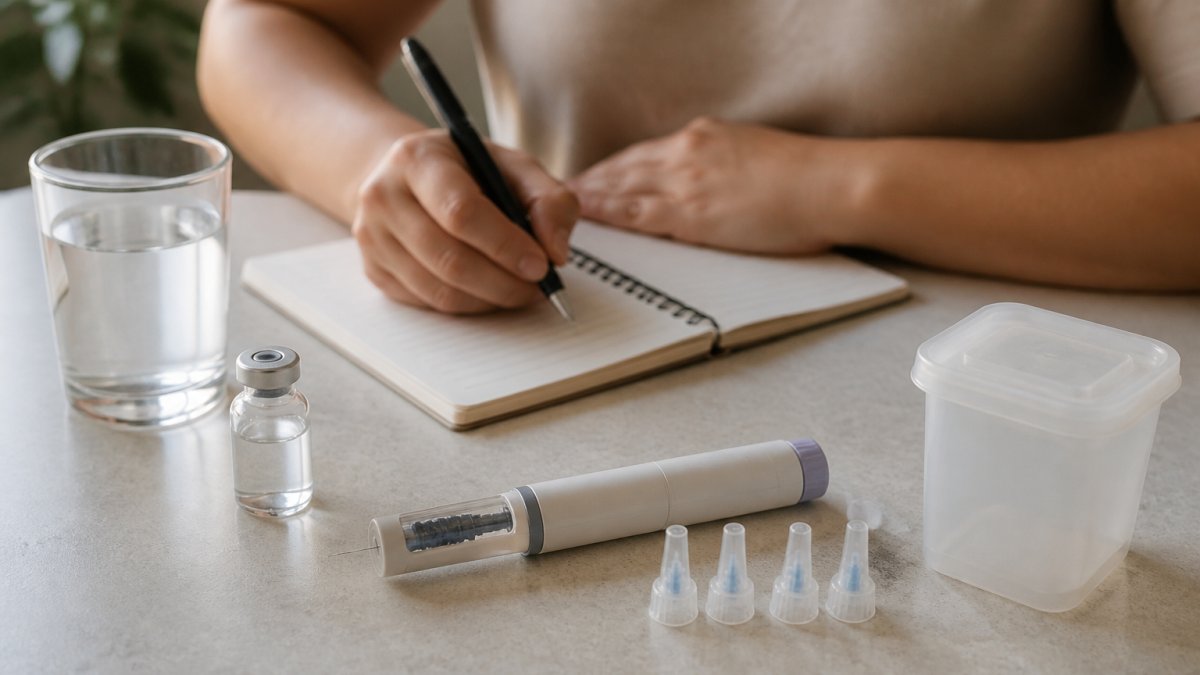
Table of Contents
- The Standard Semaglutide Dosage Schedule for Weight Loss
- Semaglutide Dose Chart for Weight Loss: Quick Reference
- How Semaglutide Works for Weight Loss
- Semaglutide Dose Increase Side Effects: What to Expect
- Missed Semaglutide Dose: What to Do
- Compounded Semaglutide Dosing Instructions and Safety
- Expected Weight-Loss Timeline and Progress Tracking
- When to Adjust Your Dose and When Not To
- Frequently Asked Questions
Last Updated: October 8, 2026
The Standard Semaglutide Dosage Schedule for Weight Loss
The semaglutide dosage schedule for weight loss follows a gradual escalation, known as dose titration, starting at the lowest effective dose and increasing every four weeks until reaching maintenance. Jumping doses or skipping steps can trigger nausea, vomiting, and other tolerability issues that derail your progress.
At MedShape Weight Loss Clinics, we follow the standard semaglutide dosage schedule proven effective across diverse patient populations. The escalation takes 16 weeks to reach the target maintenance dose, giving your body time to adjust at each step.
Weeks 1-4: Starting Dose (0.25 mg)
Your journey begins with 0.25 mg injected subcutaneously once weekly. This phase establishes tolerability and lets your GLP-1 receptors respond gradually. Most patients tolerate it well, though some experience mild nausea that resolves within a few days.
During weeks 1-4, inject on the same day and time each week to establish a rhythm and track your response. Many patients report mild appetite suppression, subtle compared to later phases but the first signal the medication is working.
Weeks 5-8: First Increase (0.5 mg)
After four weeks at 0.25 mg, your dose doubles to 0.5 mg weekly. Most patients begin noticing meaningful appetite reduction and early weight loss. Temporary nausea or changes in food preferences may occur but typically diminish after 3-5 days.
At this stage, portions naturally decrease. You’ll feel fuller faster and experience reduced cravings for high-calorie foods, not through willpower but because the medication works on your brain’s appetite regulation centers. Stick with your injection schedule before moving to the next dose.
Weeks 9-12: Second Increase (1 mg)
The second escalation brings you to 1 mg weekly, a significant step in appetite suppression where patients often see accelerated weight loss. Mild nausea during the transition week typically resolves quickly.
At 1 mg, many patients find previously enjoyed foods suddenly unappetizing. This shift is normal: eating becomes functional rather than emotional, and most people begin seeing meaningful progress on the scale.
Weeks 13-16: Third Increase (1.7 mg)
The 1.7 mg dose is another significant titration step, often considered the “sweet spot” where weight loss accelerates noticeably without excessive side effects. The increase may temporarily intensify appetite suppression, but tolerance typically improves quickly.
At this dose, many patients experience “food amnesia”, forgetting to eat because hunger signals have largely disappeared. This requires intentional meal planning: eat smaller, nutrient-dense portions at regular intervals rather than skipping meals.
Week 17 Onward: Maintenance Dose (2.4 mg)
The maintenance dose of 2.4 mg weekly is the target endpoint of the semaglutide dosage schedule for weight loss, reached around week 17. This is where most patients stabilize for ongoing weight management.
At maintenance, side effects usually plateau or diminish as your body fully adapts. Weight loss continues at a more gradual pace than during titration, which is normal. Many patients maintain 2.4 mg for 6-12 months or longer, depending on goals and tolerability.
Semaglutide Dose Chart for Weight Loss: Quick Reference
| Week Range | Dose | Frequency | Primary Effect |
|---|---|---|---|
| Weeks 1-4 | 0.25 mg | Once weekly | Tolerability establishment |
| Weeks 5-8 | 0.5 mg | Once weekly | Initial appetite reduction |
| Weeks 9-12 | 1 mg | Once weekly | Accelerated weight loss begins |
| Weeks 13-16 | 1.7 mg | Once weekly | Significant appetite suppression |
| Week 17+ | 2.4 mg | Once weekly | Maintenance and long-term management |
Your clinician may adjust timing based on your individual response and tolerability. Some patients need extra time at certain doses, while others advance on schedule.
How Semaglutide Works for Weight Loss
Semaglutide is a GLP-1 receptor agonist that mimics the glucagon-like peptide-1 hormone your body naturally produces, which regulates appetite, blood sugar, and food intake signals in your brain. Activating these receptors tells your brain you’re fuller longer, reducing hunger and cravings.

The mechanism works on multiple levels: it slows gastric emptying, prolonging fullness and reducing your desire to eat; it affects appetite centers in your hypothalamus, dampening hunger signals; and it improves blood sugar control, stabilizing energy levels and reducing sugar cravings.
Unlike stimulant-based medications that increase heart rate or cause jitteriness, semaglutide works through appetite regulation, so side effects are primarily gastrointestinal rather than cardiovascular. You’re not forced to burn more calories; you naturally eat less because you’re genuinely less hungry, making weight loss sustainable.
The appetite suppression from semaglutide is not willpower or discipline, it’s a physiological change. Patients often report feeling surprised by how little they want to eat, which is actually a sign the medication is working correctly.
Semaglutide Dose Increase Side Effects: What to Expect
Side effects are most common during dose escalations, not maintenance. The most frequently reported are nausea, vomiting, diarrhea, and constipation, typically appearing within the first few days after an increase and resolving within 3-7 days.
Nausea is the most common side effect, usually mild to moderate and manageable with dietary adjustments: smaller, frequent meals; avoiding fatty or greasy foods; and staying hydrated. Ginger, peppermint tea, or over-the-counter anti-nausea remedies may also help.
Gastrointestinal changes are expected: some patients experience diarrhea, others constipation, both temporary. Gradually increasing fiber, staying hydrated, and regular physical activity help normalize digestion as your body adjusts.
Appetite suppression can feel intense during the first week at a higher dose, but it’s the medication working. Ensure adequate nutrition even when hunger signals are minimal: set meal times and eat smaller portions of nutrient-dense foods rather than waiting for hunger cues. (Source: clinical trial data on semaglutide for weight management)
If nausea persists beyond 7-10 days after a dose increase, or if you experience severe vomiting, contact your healthcare provider. Persistent severe symptoms may indicate the need to slow titration or adjust your approach.
Missed Semaglutide Dose: What to Do
If you miss your weekly injection, the action depends on how long since your last dose. If you remember within 2-3 days, take the missed dose as soon as you remember, then resume your regular schedule the following week.
If more than 3-4 days have passed, skip the missed dose and resume your regular schedule the following week. Taking a dose too close to your next injection risks overdosing, so a slightly longer interval is safer than doubling up.
If you miss an entire week, contact your healthcare provider or clinic for guidance. Multiple missed doses may require restarting at a lower dose or reassessing your treatment plan.
Occasional single missed doses don’t derail your progress. What matters is getting back on schedule immediately and maintaining consistency going forward. Consistency is what drives successful weight loss with semaglutide.
Compounded Semaglutide Dosing Instructions and Safety
Compounded semaglutide is prepared by a licensed pharmacy for an individual patient rather than mass-manufactured. The compounded semaglutide dosing instructions follow the same escalation schedule as branded products, but sourcing and quality control differ significantly.
When using compounded semaglutide, verify your pharmacy is state-licensed and operates under proper pharmaceutical oversight, and that the medication comes with clear labeling showing dose concentration and expiration date. Store it refrigerated between 36-46°F (2-8°C), never freeze it, and keep it away from direct sunlight.
Injection technique is identical to branded versions: subcutaneous injection once weekly into the abdomen, thigh, or upper arm. Rotate sites weekly to avoid lipodystrophy, use a fresh needle each time, and dispose of used needles in an approved sharps container.
Compounded medications may cost less than branded alternatives, but quality and consistency depend entirely on the pharmacy’s standards. MedShape Weight Loss Clinics works with licensed, regulated compounding pharmacies that maintain rigorous quality standards.
Expected Weight-Loss Timeline and Progress Tracking
Weight loss on semaglutide typically follows a predictable pattern. During the first 4 weeks at the starting dose (0.25 mg), many patients may experience initial weight loss. This initial loss reflects reduced food intake and water weight as appetite suppression begins.
By weeks 5-8 at the 0.5 mg dose, weight loss often accelerates. The appetite suppression is now more pronounced, and calorie intake drops more significantly. This is where many people first notice clothes fitting differently and energy levels improving.
Weeks 9-12 at the 1 mg dose often produce significant results. The medication’s effect on appetite is now substantial, and most people have adapted to the side effects from previous dose increases.
By week 17 and beyond at the 2.4 mg maintenance dose, weight loss continues but at a more gradual pace. This is normal and healthy. Rapid weight loss during titration is driven by significant appetite suppression.
Progress tracking should focus on more than the scale. Take measurements of your waist, hips, and chest. Note changes in how clothes fit, energy levels, and how you feel physically.
The scale is one metric, not the only one. Body composition, how you feel, energy levels, and clothing fit often tell a more complete story of progress than weight alone.
When to Adjust Your Dose and When Not To
Your healthcare provider determines dose adjustments based on your response and tolerability. Never self-adjust your dose or skip ahead in the escalation schedule. The standard four-week intervals between dose increases are designed to allow your body adequate time to adapt.
Adjust your dose upward if you’re tolerating your current dose well and weight loss has plateaued. If you’ve been at the same dose for 4+ weeks with minimal new weight loss, moving to the next dose typically restarts progress.
Do not increase your dose if you’re experiencing significant side effects. Instead, give your body more time at the current dose. Most side effects resolve within 7-10 days. If they persist beyond two weeks, contact your provider.
Do not decrease your dose without consulting your healthcare provider. If side effects are manageable and temporary, pushing through typically leads to better outcomes than backing down.
Monitor your progress objectively. If you’re losing weight, tolerating the dose, and experiencing manageable side effects, stay the course. Impatience often leads to dose increases that trigger excessive side effects, which then derails treatment.
Successfully managing your semaglutide dosage schedule for weight loss requires consistency, patience, and professional guidance. We specialize in compounded semaglutide treatment that’s customized to your health needs and medical history, helping you achieve sustainable weight loss without the guesswork. Consult our team about personalized semaglutide treatment to start your medically supervised weight loss journey with clinicians who understand both the science and the practical challenges of long-term weight management.
Frequently Asked Questions
What is the typical semaglutide dosage schedule for weight loss?
The standard semaglutide dosage schedule starts at 0.25 mg once weekly for weeks 1-4, then increases by 0.25 mg every four weeks: 0.5 mg (weeks 5-8), 1 mg (weeks 9-12), 1.7 mg (weeks 13-16), and 2.4 mg from week 17 onward as the maintenance dose. This gradual titration allows your body to adjust to the medication and helps minimize side effects. Your healthcare provider may adjust this schedule based on your individual response and tolerability.
What should I do if I miss a semaglutide dose?
If you miss your weekly semaglutide injection, take it as soon as you remember within 5 days of the missed dose. After 5 days, skip the missed dose and resume your regular schedule the following week. Do not take two injections to make up for a missed dose. If you miss multiple doses, contact your healthcare provider before resuming treatment, as they may recommend restarting at a lower dose or adjusting your schedule based on how long you’ve been off the medication.
What side effects can happen when the semaglutide dose increases?
Common side effects during dose increases include nausea, vomiting, diarrhea, and constipation. These typically occur in the first few days after an increase and often improve within a week as your body adjusts. Reduced appetite and feelings of fullness are expected and contribute to weight loss. Severe or persistent side effects may warrant a slower dose escalation or temporary pause. Your healthcare provider can recommend strategies like eating smaller meals or adjusting meal timing to manage these effects while you adjust to each new dose.
How is compounded semaglutide dosed differently from brand-name medication?
Compounded semaglutide follows the same dosage schedule as brand-name semaglutide products like Wegovy, starting at 0.25 mg weekly and titrating up every four weeks. The key difference is that compounded versions are custom-made by a pharmacy rather than mass-manufactured. Your compounded prescription should clearly state the dose in milligrams and injection frequency. Always verify the dose on your compounded prescription matches your healthcare provider’s instructions before injecting, and store it according to the pharmacy’s guidelines, typically in the refrigerator.