Skip to content

Table of Contents
- Understanding Energy Deficit and Caloric Intake
- How to Calculate Caloric Deficit for Your Goals
- Benefits of High Protein Diets for Weight Loss
- The Science of Intermittent Fasting and Metabolic Health
- Physical Activity and Exercise for Sustainable Weight Loss
- Role of Sleep in Weight Management and Metabolic Adaptation
- Behavioral Strategies and Long-Term Weight Maintenance
- Conclusion
Last Updated: August 14, 2026
Understanding Energy Deficit and Caloric Intake
An energy deficit occurs when you consume fewer calories than your body burns, forcing it to tap into stored fat for fuel. This is the fundamental mechanism behind all weight loss. Without a caloric deficit, weight loss simply doesn’t happen.
Most people underestimate how many calories they consume and overestimate how many they burn through daily activity. This gap between perception and reality is where most weight loss attempts derail.
Your metabolic rate, the number of calories your body burns at rest, varies based on age, sex, muscle mass, and genetics. We recognize that two people of the same weight and age can have significantly different caloric needs. This is why one-size-fits-all diet plans fail so often.
Protein requires more energy to digest than carbohydrates or fat, which is one reason high-protein diets show consistent results for weight loss. But the energy deficit remains the primary driver; protein just makes that deficit easier to maintain by increasing satiety and preserving muscle mass.
How to Calculate Caloric Deficit for Your Goals
To lose weight effectively, you need to know your maintenance calorie level, the number of daily calories that keeps your weight stable. A modest deficit of 300-500 calories per day typically produces sustainable weight loss of 0.5 to 1 pound per week. More aggressive deficits may accelerate fat loss but increase the risk of muscle loss, fatigue, and metabolic adaptation.
Start by calculating your Basal Metabolic Rate (BMR) using established formulas, then multiply by an activity factor to estimate total daily energy expenditure. Online calculators provide reasonable starting points. Track your actual weight over 2-3 weeks at a consistent calorie intake. If the scale doesn’t budge, your deficit isn’t deep enough. If you’re losing more than 2 pounds per week, your deficit may be too aggressive.
The practical approach: pick a calorie target, track honestly for at least two weeks, and adjust based on results. Many people find that tracking macronutrients, especially protein intake, matters more than obsessing over exact calorie counts. When you hit your protein target, calorie management often follows naturally.
Common mistakes include setting deficits that are too aggressive, not accounting for liquid calories and cooking oils, and underestimating portion sizes. A food scale removes guesswork.
Benefits of High Protein Diets for Weight Loss
Protein is the most satiating macronutrient. Eating adequate protein keeps you fuller longer, reduces cravings, and decreases overall calorie intake without requiring willpower or restriction. This is why high-protein diets consistently outperform low-protein approaches in research.
Protein also supports protein synthesis, the process of building and maintaining muscle tissue. During weight loss, your body is in a catabolic state. Adequate protein (roughly 0.8-1 gram per pound of body weight) signals your muscles to stay, preserving lean mass while fat is lost. Muscle is metabolically active and burns calories even at rest.
Higher protein intake also increases the thermic effect of food. Your body burns roughly 20-30% of protein calories during digestion, compared to 5-10% for carbohydrates and 0-3% for fat. Over time, this contributes meaningfully to your energy deficit.
Aim for protein at every meal. Eggs, Greek yogurt, lean meats, fish, legumes, and protein powder are efficient sources. Many people find that hitting their protein target (often 100-150+ grams daily, depending on body weight) naturally creates the caloric deficit they need without feeling deprived.
The Science of Intermittent Fasting and Metabolic Health
Intermittent fasting (IF) is a pattern of eating that cycles between periods of eating and fasting. Common protocols include 16:8 (16-hour fast, 8-hour eating window), 5:2 (eating normally five days, restricting calories two days), or alternate-day fasting. The appeal is straightforward: fasting simplifies meal timing and can reduce overall calorie intake without constant calorie counting. However, effectiveness depends heavily on individual metabolic factors.
The metabolic baseline: Fasting doesn’t inherently "boost" metabolism. What it does is create a caloric deficit by reducing eating opportunities. However, the magnitude of that deficit varies dramatically between individuals based on age, hormonal status, and baseline metabolic rate. A 25-year-old man with high insulin sensitivity may find a 16:8 protocol effortless. A 45-year-old woman with insulin resistance or hormonal imbalance may find the same protocol unsustainable.
Hormonal responses vary significantly. Fasting triggers changes in cortisol (stress hormone), ghrelin (hunger hormone), and insulin. In some people, fasting improves insulin sensitivity. In others, especially those with a history of restrictive dieting or chronic stress, fasting can elevate cortisol and worsen insulin sensitivity. Women, particularly those in perimenopause or menopause, often experience different hormonal responses to fasting than men.
Gut microbiome diversity influences tolerance. Your gut bacteria influence hunger hormones, nutrient absorption, and metabolic efficiency. People with diverse microbiomes often tolerate fasting better and see better metabolic outcomes. Those with less diverse microbiomes may experience bloating, dysbiosis, or poor energy during fasting windows.
Age-related metabolic changes matter. Younger adults (under 35) generally tolerate intermittent fasting well. Adults over 50 often experience different outcomes. Muscle loss accelerates with age, and fasting without adequate protein during eating windows can accelerate this loss.
The practical advantage of IF: For people who respond well, fasting can reduce meal prep complexity and decision fatigue. However, intermittent fasting isn’t superior to regular eating patterns for weight loss if total calorie intake is equal.
When intermittent fasting fails: Common reasons include overeating during eating windows, hormonal incompatibility (especially for women), muscle loss without adequate protein, and psychological barriers for those with a history of restrictive eating.
The evidence-based approach: Rather than adopting IF as a universal protocol, assess your individual response. If you naturally skip breakfast and feel energized, a 16:8 protocol may work. If you feel deprived, hungry, or fatigued, a more traditional eating pattern may be superior. The best approach is the one you’ll actually stick to.
If you choose to try intermittent fasting, monitor your response over 4-6 weeks: Do you have stable energy? Are you hitting your protein targets during eating windows? Is your weight trending down? Are you maintaining muscle? If the answer to all four is yes, continue. If not, try a different eating pattern.
Physical Activity and Exercise for Sustainable Weight Loss
Exercise contributes to weight loss in two ways: it increases daily energy expenditure and, when combined with adequate protein, preserves muscle mass during caloric restriction. Cardiovascular exercise burns calories during the activity itself. Resistance training burns fewer calories during the workout but preserves and builds muscle, which increases your resting metabolic rate over time.
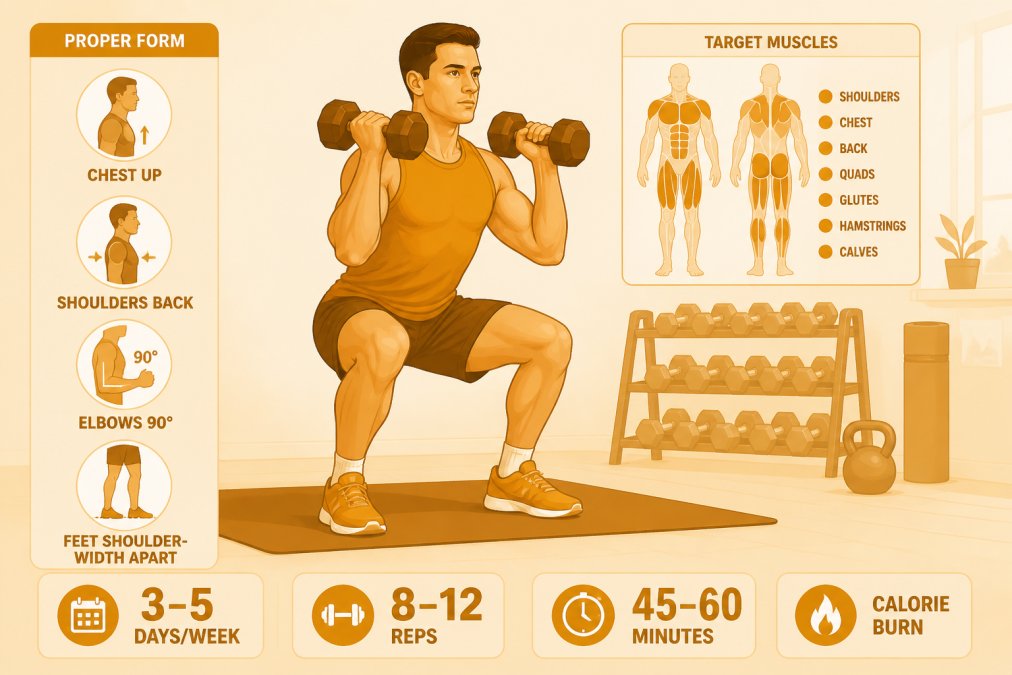
The most effective approach combines both. Resistance training 3-4 times per week preserves muscle while you’re in a deficit. Cardiovascular exercise 2-3 times per week increases overall calorie burn without excessive fatigue. Walking, cycling, swimming, and rowing are sustainable options.
A common mistake is expecting exercise alone to drive significant weight loss. A 200-pound person burns roughly 200-300 calories in a 30-minute run, the caloric equivalent of a single snack. Exercise is a powerful tool for preserving muscle and improving cardiovascular health, but the caloric deficit created through eating is the primary driver of fat loss.
Start with activity you enjoy. Consistency matters infinitely more than intensity. Build gradually, avoid injury, and view exercise as a long-term investment in health.
Role of Sleep in Weight Management and Metabolic Adaptation
Sleep deprivation disrupts the hormones that regulate hunger and satiety. When you’re sleep-deprived, your body produces more ghrelin (hunger hormone) and less leptin (satiety hormone), making you crave food and feel less satisfied when you eat. Over weeks and months, poor sleep makes maintaining a caloric deficit substantially harder.

Sleep also influences metabolic adaptation, your body’s tendency to reduce energy expenditure when in a sustained deficit. During deep sleep, your body regulates hormones like cortisol that influence how your body partitions energy. Adequate sleep (7-9 hours nightly for most adults) supports metabolic health and makes fat loss more efficient.
Poor sleep is correlated with weight gain independent of calorie intake. People who sleep less tend to weigh more, even when controlling for diet and exercise. Disrupted circadian rhythms, altered glucose metabolism, and increased cortisol levels all play roles.
Improve sleep hygiene by keeping your bedroom dark and cool, avoiding screens 30-60 minutes before bed, and maintaining consistent sleep and wake times. If sleep remains poor despite these efforts, consult a healthcare provider.
Behavioral Strategies and Long-Term Weight Maintenance
Weight loss is the easy part for many people. Maintaining that loss is where most struggle. After weight loss, your body actively resists staying at the lower weight. Your hunger hormones (ghrelin) increase, your satiety hormones (leptin) decrease, and your metabolic rate drops by 10-25% relative to what you’d expect for your new body size. This is called adaptive thermogenesis. Understanding this isn’t discouraging; it’s liberating. Weight regain isn’t a personal failure, it’s your body’s physiology working against you.
The most successful long-term maintainers use specific, evidence-backed protocols rather than relying on willpower alone:
Self-monitoring and regular check-ins are among the strongest predictors of maintenance success. People who weigh themselves weekly or track food intake periodically catch small gains (2-3 pounds) before they spiral. The National Weight Control Registry, which tracks over 10,000 people who have lost 30+ pounds and kept it off for at least one year, found that 75% weigh themselves at least weekly.
Protein maintenance becomes even more critical post-weight loss. During maintenance, it continues to support satiety and metabolic health. Most successful maintainers keep protein intake at 25-35% of total calories.
Structured relapse prevention addresses the psychological barriers that derail most people. Identify your specific triggers: stress eating, social situations, boredom, or fatigue. For each trigger, develop a concrete alternative behavior before you face it. If stress eating is your pattern, your alternative might be a 10-minute walk, calling a friend, or a pre-portioned snack.
Habit stacking leverages existing routines to maintain new behaviors. Rather than relying on motivation, anchor your weight maintenance habits to existing daily rituals. If you always have coffee in the morning, that’s when you weigh yourself. If you always walk after dinner, that’s your movement anchor.
Social accountability and community matter more than most people realize. People who involve others in their weight maintenance maintain weight loss significantly better than those going solo.
Expect and plan for plateaus and fluctuations. Weight naturally fluctuates 2-5 pounds daily based on water retention, hormonal cycles, digestion timing, and sodium intake. Track trends over 4-week periods. If you’re genuinely gaining over a month, adjust your calorie intake down by 100-200 calories or increase activity slightly.
Address emotional eating directly. For many people, food serves a psychological function. Weight loss doesn’t automatically fix this. If you used food to cope with stress, boredom, or sadness during weight loss, you’ll face the same triggers during maintenance. Consider whether you need additional support: therapy (especially cognitive-behavioral therapy), a structured program with behavioral coaching, or a support group.
The practical reality: maintenance requires ongoing attention, but not the intensity of active weight loss. Most successful maintainers spend 30-60 minutes per week on weight management activities. This is a small investment relative to the health benefits.
Frequently Asked Questions
What is the most scientifically proven way to lose weight?
Creating an energy deficit through a combination of reduced caloric intake and increased physical activity remains the most evidence-based approach. Research consistently shows that sustainable weight loss requires both dietary changes and regular exercise, supported by behavioral modifications like self-monitoring and stress management. The specific method, whether intermittent fasting, low-carb diets, or calorie counting, matters less than adherence to the underlying principle of consuming fewer calories than you expend.
How do I calculate my caloric deficit for weight loss?
Start by determining your basal metabolic rate (BMR) using your age, weight, height, and sex. Multiply your BMR by your activity level factor to find your total daily energy expenditure. To lose weight, subtract 500-750 calories from this number to aim for 1-1.5 pounds per week. A board-certified physician or registered dietitian can provide a personalized calculation based on your individual metabolic rate, health conditions, and weight loss goals.
Why is protein intake important for weight loss?
High protein diets increase satiety, reduce hunger hormones, and boost thermogenesis, the energy your body uses to digest food. Protein also preserves lean muscle mass during weight loss and supports protein synthesis, preventing metabolic slowdown. Studies show that increasing protein intake while maintaining a caloric deficit leads to greater fat loss and improved body composition compared to low-protein approaches.
Does intermittent fasting actually help with weight loss?
Intermittent fasting can support weight loss by simplifying caloric restriction and improving insulin sensitivity, but it works primarily through creating an energy deficit. Research shows it is as effective as traditional calorie counting for fat loss, though adherence varies by individual. The key advantage is behavioral, some people find it easier to follow eating windows than counting calories throughout the day.
How does sleep affect weight management?
Poor sleep disrupts hormones that regulate hunger and satiety, increasing cortisol levels and appetite. Inadequate sleep also slows metabolic rate and reduces the body's ability to regulate glucose, making weight loss harder. Studies show that people who sleep 7-9 hours per night lose more fat and preserve more muscle during weight loss compared to those sleeping less than 6 hours.
What happens if I lose weight but gain it back?
Weight regain after loss is common due to metabolic adaptation and behavioral drift. Long-term maintenance requires sustained behavioral changes, including self-monitoring, regular physical activity, adequate protein intake, and stress management. Working with a physician or nutrition specialist to develop an individualized maintenance plan, rather than returning to old habits, significantly improves the likelihood of keeping weight off permanently.
This article was written using GrandRanker