Skip to content


Quick Summary
Compounded GLP-1 medications are custom-mixed versions of drugs like semaglutide and tirzepatide, prepared by a pharmacy for an individual prescription and not reviewed by the FDA for safety, effectiveness, or quality. FDA-approved drugs have gone through federal review of their manufacturing, labeling, and clinical data, which makes them the more predictable choice.
- Compounded products are made to order and do not carry FDA approval.
- Compounded versions can differ in strength, concentration, and salt form from approved products.
- Shortage status determines whether compounding is permitted, so check the FDA shortage database before each refill.
- Confirm concentration and exact injection volume to avoid dosing errors with compounded solutions.
- Report serious adverse events to the FDA MedWatch program and stop injecting if you suspect a problem.
Table of Contents
- What Compounded GLP-1 Medications Are and How They Differ From FDA-Approved Drugs
- FDA Approval, Review, and the Shortage Rules That Govern Compounding
- Compounded GLP-1 Safety: Quality Control, Dosing Errors, and Adverse Events
- FDA-Approved GLP-1 for Weight Loss: Semaglutide, Tirzepatide, and Salt Forms
- Compounded GLP-1 Effectiveness and the Limits of the Evidence
- Compounded GLP-1 Ban Update: Where Availability Stands Now
- Choosing Between Compounded and FDA-Approved Options: Verifying Your Pharmacy and Next Steps
- Frequently Asked Questions
What Compounded GLP-1 Medications Are and How They Differ From FDA-Approved Drugs
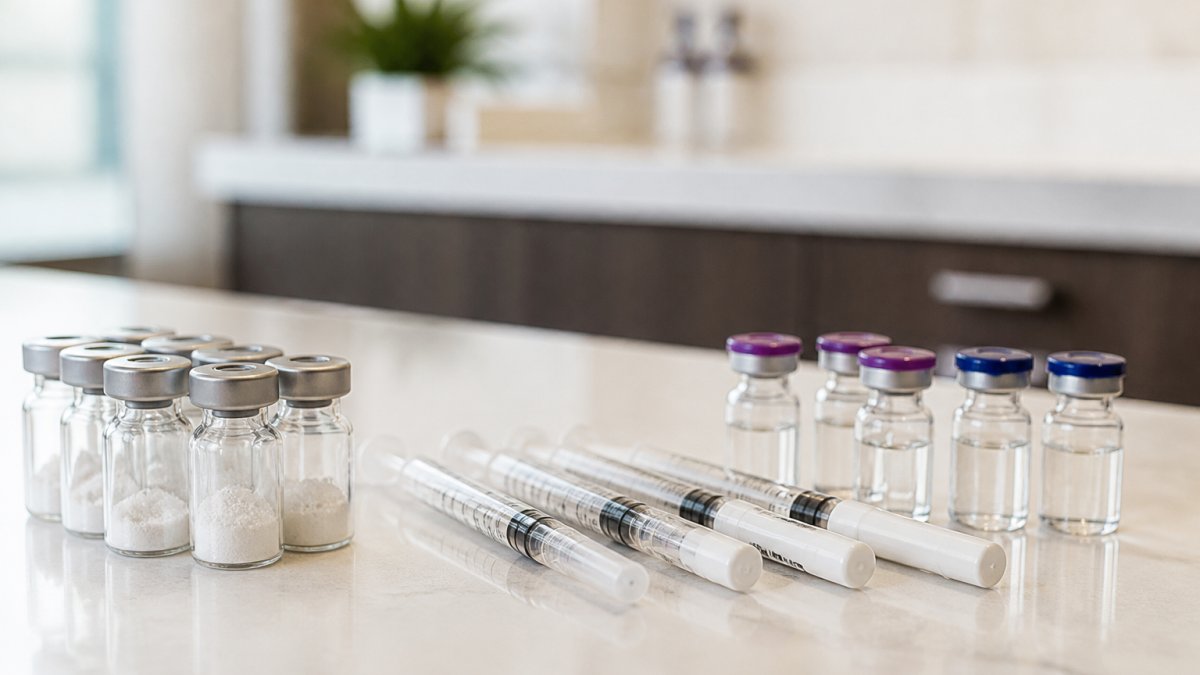
Compounded GLP-1 medications are custom-mixed versions of drugs such as semaglutide and tirzepatide, prepared by a pharmacy for an individual prescription. They are not reviewed by the FDA for safety, effectiveness, or quality before they reach patients. That single difference shapes nearly every comparison that follows.
A compounded product is made to order, while an FDA-approved drug has gone through a federal review of its manufacturing, labeling, and clinical data. The FDA’s guidance on compounded drugs explains that compounded drugs do not carry that approval.
Compounding has grown quickly. At the peak in 2024, nearly 1 in 3 Americans taking a GLP-1 drug said they obtained it from a compounding pharmacy, according to Stanford Medicine’s 2026 analysis of compounded GLP-1 safety. That scale is why the differences matter to ordinary patients.
Compounded versus FDA-approved, in short:
- Compounded products are prepared by a pharmacy for a specific prescription and are not FDA-approved.
- FDA-approved products have been reviewed for safety, effectiveness, and manufacturing quality.
- Compounded versions can differ in strength, concentration, and salt form from the approved product.
FDA Approval, Review, and the Shortage Rules That Govern Compounding
Compounding is not a loophole; it is a set of narrow federal exemptions. Understanding which exemption a pharmacy is operating under explains most of the practical differences patients notice, from labeling to refill availability.
Two pathways, two sets of rules. Federal law recognizes two main compounding categories under the Federal Food, Drug, and Cosmetic Act:
- Section 503A pharmacies are traditional compounding pharmacies that compound for an individual patient with a prescription. They are primarily overseen by state boards of pharmacy, and they are subject to federal restrictions on the bulk ingredients they may use.
- Section 503B outsourcing facilities register with the FDA, are inspected by the FDA on a risk-based schedule, and may compound larger quantities without patient-specific prescriptions, but they must meet federal current good manufacturing practice requirements and report adverse events.
The FDA’s guidance on compounded drugs lays out these categories. A product’s label and the pharmacy’s registration status should tell you which one applies.
Why shortage status changes everything. Ordinarily, a 503A or 503B compounder may not make a copy of a commercially available FDA-approved drug.
This is the single most time-sensitive fact in the entire comparison. The FDA’s clarification on compounder policies as the national GLP-1 supply stabilizes is the clearest current statement of how the agency is applying those rules to semaglutide and tirzepatide.
How to check status yourself, in order:
- Open the FDA’s drug shortage database and search for the specific active ingredient and dosage form (for example, semaglutide injection).
- Note whether the entry says “Currently in shortage” or “Resolved,” and read the date on the entry.
- If the shortage is resolved, assume that broad compounding of a copy is no longer permitted unless the pharmacy can point to a specific remaining exception.
- Ask the pharmacy which pathway it operates under (503A or 503B) and whether it is registered with the FDA as an outsourcing facility.
- Re-check before every refill, not just at the start of treatment.
Shortage status can change between the time a prescription is written and the time it is filled, so a refill that was fine last month is not proof that the same product is permitted now.
What this means for patients. If an FDA-approved product is available and appropriate for you, the shortage rules do not create a reason to prefer a compounded copy.
Because these conditions shift, confirm the current FDA status before you start or continue treatment.
Compounded GLP-1 Safety: Quality Control, Dosing Errors, and Adverse Events
Safety is the area where compounded and approved products differ most in practice. Compounded drugs have not been reviewed by the FDA for quality, and that gap shows up in several ways. Potency can vary between batches, and sterility depends heavily on the pharmacy’s process.

A 2025 review of the global rise of compounded weight-loss medicines reports that compounded drugs have been found to carry greater risks than FDA-approved drugs. Another PubMed-indexed study of safety reports for compounded GLP-1 receptor agonists compares safety reporting for compounded and approved products.
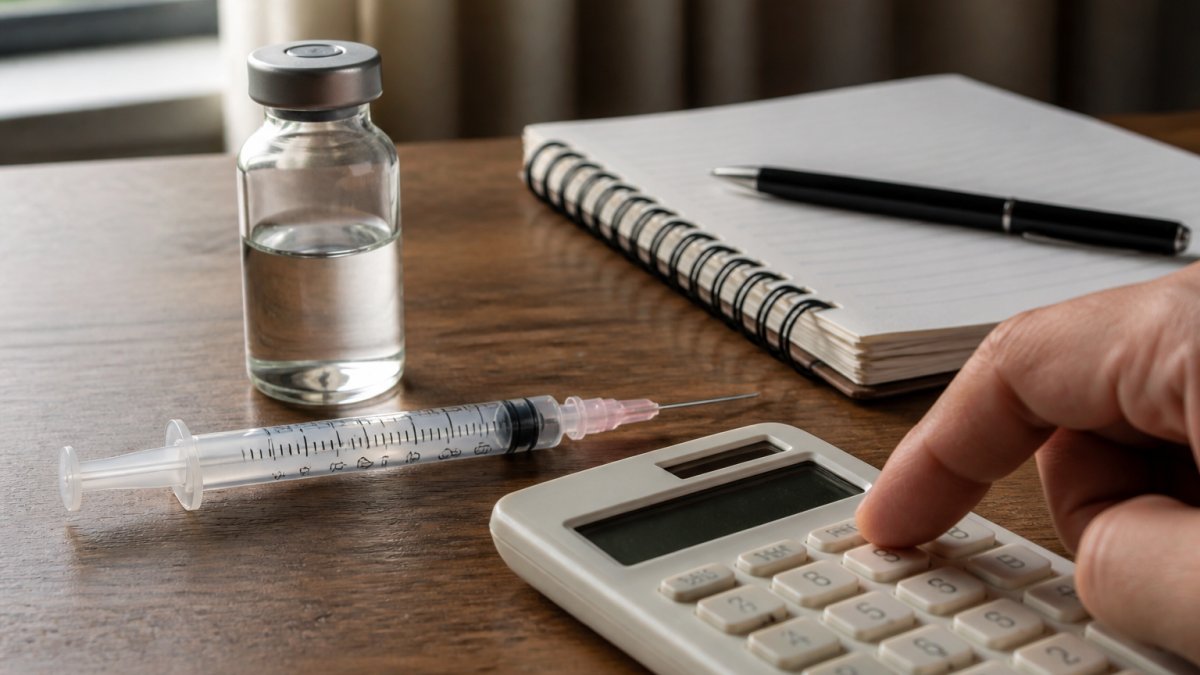
Dosing errors are a practical risk. Compounded solutions are often measured in units that differ from the approved pen, so a dose that looks familiar can deliver much more drug than intended. Always confirm the concentration on the label and the exact volume to inject before the first dose.
If you suspect a problem, stop the injection, contact your prescriber promptly, and keep the vial or syringe. Report serious adverse events to the FDA MedWatch program.
The main safety differences between compounded and approved products show up in a few concrete areas:
| Risk area | What the article says | Practical step |
|---|---|---|
| Quality control | Compounded drugs are not FDA-reviewed for quality | Ask about batch potency and sterility |
| Dosing | Compounded units often differ from the approved pen | Confirm concentration and exact volume |
| Greater risk | A 2025 review found greater risks than approved drugs | Weigh risks before choosing compounded |
| Suspected problem | Symptoms may signal an error or reaction | Stop injecting and contact your prescriber |
| Reporting | Serious adverse events go to FDA MedWatch | Keep vial and syringe for reporting |
FDA-Approved GLP-1 for Weight Loss: Semaglutide, Tirzepatide, and Salt Forms
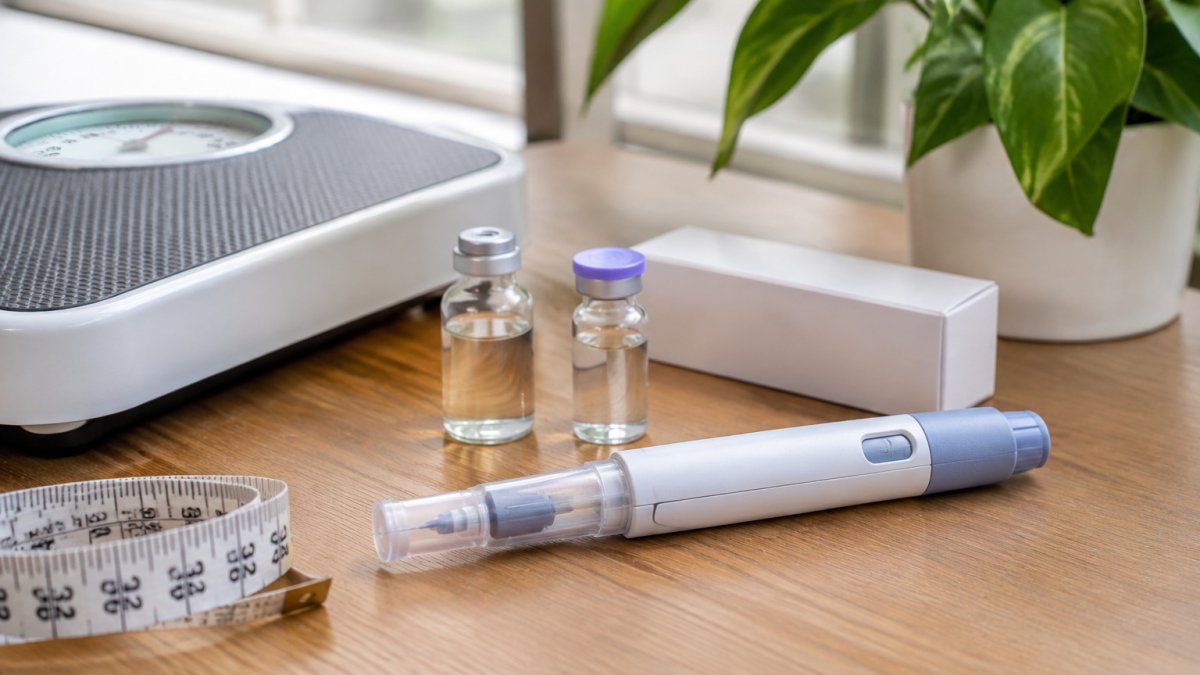
Approved GLP-1 options include Wegovy, an FDA-approved semaglutide medication available as an injection, and Zepbound, an FDA-approved tirzepatide medication.
Salt forms are a detail patients often miss. An approved product’s labeled amount refers to a specific salt form, and a compounded product may list a different one. The same number on a label can therefore mean a different dose of the active ingredient.
To confirm a product is approved, look for the brand name on the FDA’s approved drug listings and check that the active ingredient and strength match your prescription.
Compounded GLP-1 Effectiveness and the Limits of the Evidence
The evidence for compounded GLP-1 products is thinner than the evidence for approved ones. Approved semaglutide and tirzepatide have been studied in large clinical trials. Compounded versions generally have not been tested in comparable trials, and the 2025 review of compounded weight-loss medicines notes that evidence on compounded GLP-1 receptor agonists is insufficient.
That limit matters when you compare results. An outcome reported for an approved drug in a trial does not automatically apply to a compounded version with different strength or salt form. Be cautious with any claim that a compounded product works the same way.
Weight loss results also vary widely between people. Age, hormone changes, thyroid status, and other conditions all influence what a given treatment does for an individual. Discuss realistic expectations with a licensed clinician before starting.
Compounded GLP-1 Ban Update: Where Availability Stands Now
Availability is changing, and this is the area where dated information goes out of date fastest. The FDA’s current position is that compounding under the shortage rules is limited and conditional, not a standing permission for mass-market weight-loss use. Confirm the status on the FDA website before making any decision, because the rules have shifted with supply levels.
We will not state a specific ban date here, since the research available does not confirm one. Check the official FDA drug shortage pages for the current status of semaglutide and tirzepatide.
Choosing Between Compounded and FDA-Approved Options: Verifying Your Pharmacy and Next Steps
If you are weighing these options, start with the approved product. An FDA-approved medication has been reviewed for safety, effectiveness, and manufacturing quality, which makes it the more predictable choice.
A verification checklist you can actually run. A legitimate compounding pharmacy should be able to answer these questions:
- State licensure. Confirm the pharmacy is licensed in your state. The National Association of Boards of Pharmacy licensee lookup is a starting point, and your state board of pharmacy maintains its own license search.
- Pharmacy type. Ask whether it is a traditional 503A compounding pharmacy or an FDA-registered 503B outsourcing facility. The answer determines which federal rules apply and how the product should be labeled.
- Prescription specificity. A 503A pharmacy should be filling a prescription written for you after a clinician evaluated you. A product sold without an individual prescription is a red flag.
- Label contents. The label should show the drug name, strength, concentration, volume, lot number, beyond-use date, and pharmacy contact information. Ask for the exact strength and salt form in writing.
- Ingredient identity. Ask whether the active ingredient is the same salt form as the FDA-approved product and where the bulk ingredient was sourced. A different salt form can mean a different amount of active drug for the same number on the label.
- Sterility and handling. For injectables, ask how the pharmacy maintains sterility and whether it has had any recent recalls or inspection findings.
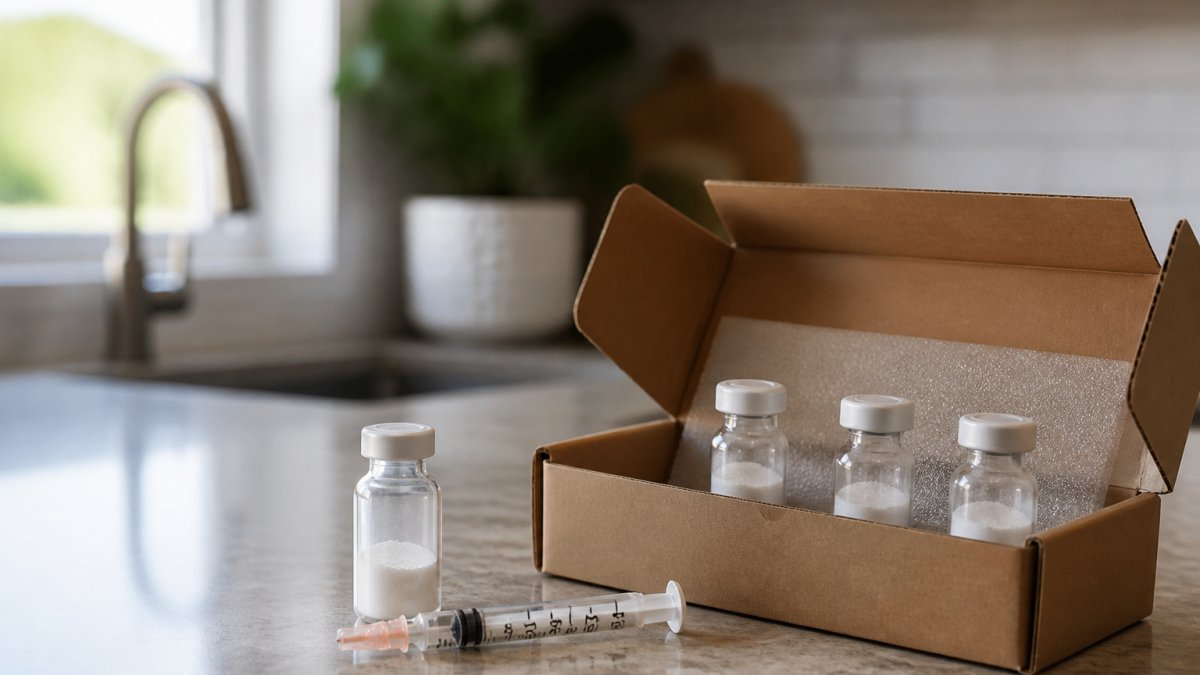
Dose-conversion and administration errors are the most common practical harm. Compounded solutions are often supplied in vials with concentrations and syringe units that differ from the approved pen, so a dose that looks familiar can deliver far more drug than intended.
“Units” on an insulin syringe and “mg” on a vial label are not interchangeable, so confirm the units with your prescriber or pharmacist.
If something goes wrong. Stop the injection, contact your prescriber promptly, and keep the vial, syringe, and packaging. For a suspected overdose or serious reaction, contact a poison control center or seek emergency care.
What to do next. If you want a side-by-side look at how these options compare on cost, safety, and results, read our compounded tirzepatide vs brand name comparison. If you want to confirm which semaglutide products are actually approved for weight loss, our guide to checking FDA-approved semaglutide walks through the steps. Before starting any GLP-1 medication, ask your clinician whether you have a condition that makes it unsafe; our list of contraindications for GLP-1 medications covers the situations where these drugs should be avoided.
At MedShape Weight Loss Clinics, treatment is physician-supervised. Pricing depends on the medication, dose, and program, so contact us directly for a current quote. A consultation is the right next step to determine which option suits your health history.
Frequently Asked Questions
Are compounded GLP-1 drugs FDA-approved?
No. Compounded GLP-1 drugs are not FDA-approved. The FDA states that compounded drugs are not reviewed by the agency for safety, effectiveness, or quality before they are marketed. Compounding is permitted only under conditions set out in sections 503A and 503B of the Federal Food, Drug, and Cosmetic Act, and those exemptions depend on factors such as drug shortage status. Because of this, compounded products should not be treated as interchangeable with FDA-approved semaglutide or tirzepatide.
Are compounded GLP-1 drugs as effective as FDA-approved medications?
The evidence is limited. A 2025 review reported insufficient data on compounded GLP-1 receptor agonists, so there is no reliable head-to-head proof that compounded versions perform like FDA-approved semaglutide or tirzepatide. FDA-approved products were tested in clinical trials for dose, concentration, and outcomes. Compounded products generally have not undergone that testing, which is why a clinician should weigh the uncertainty before recommending one.
What is the difference between compounded semaglutide and FDA-approved semaglutide?
FDA-approved semaglutide, sold under brand names such as Wegovy, has been reviewed by the FDA for safety, effectiveness, and manufacturing quality. Compounded semaglutide is prepared by a pharmacy and is not reviewed by the FDA before marketing. Compounded versions can differ in concentration, salt form, and sterility, and the FDA has reported safety concerns about compounded products. Confirm the exact formulation and source with your prescriber.
How can patients check a compounding pharmacy’s credentials?
Confirm that the pharmacy holds a current state pharmacy license and that it is registered with the FDA if it compounds under section 503B. Ask whether a licensed pharmacist supervises compounding, how the product is tested for sterility and potency, and what the source of its active ingredient is. Check state board of pharmacy records directly, and be cautious of any pharmacy that cannot answer these questions clearly.