Skip to content


Last Updated: October 27, 2026
Quick Summary
You take tirzepatide injections once a week, on the same day each week. This weekly schedule stays the same for every approved dose strength, from the 2.5 mg starting dose through the 15 mg maximum dose. Only the amount you inject increases over time, not how often you inject.
- The starting dose is 2.5 mg once weekly for the first four weeks, given for tolerability rather than maximum effect.
- Dose increases happen in 2.5 mg steps, generally no faster than every four weeks, while frequency stays weekly.
- The three approved injection sites are the abdomen, the front of the thigh, and the back of the upper arm.
- Never take two doses within the same week to catch up, as doubling up raises the odds of gastrointestinal side effects.
- When changing your injection day, keep at least three days between the old dose and the new one.
Table of Contents
- How Often Do You Take Tirzepatide Injections? The Once-Weekly Answer
- Your Tirzepatide Injection Schedule: Starting Dose and First Four Weeks
- Tirzepatide Dose Escalation: Why the Dose Goes Up, Not the Frequency
- How to Inject Tirzepatide: Sites, Rotation, and Step-by-Step Technique
- Missed Tirzepatide Dose: What to Do and When to Wait
- Changing Your Injection Day, Traveling, and Keeping a Weekly Routine
- Common Mistakes That Throw Off Your Weekly Dosing
- Starting Your Tirzepatide Program with Medical Supervision
- Frequently Asked Questions
How Often Do You Take Tirzepatide Injections? The Once-Weekly Answer
You take tirzepatide injections once a week. One dose, every seven days, on the same day each week.
The confusion usually comes from mixing up two separate decisions: how often you inject, and how much you inject. The frequency never changes. The amount does, gradually, under medical supervision.
According to StatPearls’ clinical reference on tirzepatide, tirzepatide is given once weekly, and doses may be raised at follow-up visits based on how well blood sugar responds, how much weight comes off, and how well the drug is tolerated.
Below, we break down the weekly schedule, what to do when you miss a dose, and how to change your injection day.
Injection Frequency vs. Dose Increases: Two Different Things
Tirzepatide injection frequency is fixed at once weekly. Dose escalation is a separate process that happens at planned intervals, not more often.
Here is the distinction most guides blur together:
- Frequency = how often you inject. Answer: once every seven days. It does not change.
- Dose = how much medication is in each injection. This starts low and climbs over months.
So when someone asks “how often do you take tirzepatide injections,” the answer is always weekly.
That separation matters. Patients sometimes assume a stronger dose means more frequent shots. It does not. A higher dose is still one weekly injection, just with more medication in it.
Your Tirzepatide Injection Schedule: Starting Dose and First Four Weeks
The standard starting dose is 2.5 mg once weekly for the first four weeks. This opening phase is not designed to produce dramatic results. It exists to let your body adjust.
Mayo Clinic’s tirzepatide dosing guidance, Cleveland Clinic’s tirzepatide overview, and manufacturer labeling all describe the same weekly structure.
Here is what the first month looks like:
- Weeks 1-4: 2.5 mg once weekly, same day each week
- Purpose: tolerability, not maximum effect
- What to expect: appetite changes may begin, but the dose is intentionally low
Tirzepatide Dose Escalation: Why the Dose Goes Up, Not the Frequency
Dose increases happen in 2.5 mg steps, generally no faster than every four weeks, according to American College of Gastroenterology guidance on tirzepatide. The frequency stays weekly throughout.
A typical escalation path looks like this:
| Phase | Weekly Dose | Typical Timing |
|---|---|---|
| Starting | 2.5 mg | Weeks 1-4 |
| Step up | 5 mg | Week 5 onward |
| Step up | 7.5 mg | After 4+ weeks at 5 mg |
| Step up | 10 mg | After 4+ weeks at 7.5 mg |
| Step up | 12.5 mg | After 4+ weeks at 10 mg |
| Maximum | 15 mg | After 4+ weeks at 12.5 mg |
How to Inject Tirzepatide: Sites, Rotation, and Step-by-Step Technique
Tirzepatide is injected subcutaneously, meaning into the fat layer just under the skin. For practical tips on making each shot less painful, see our guide to injecting tirzepatide with minimal pain.
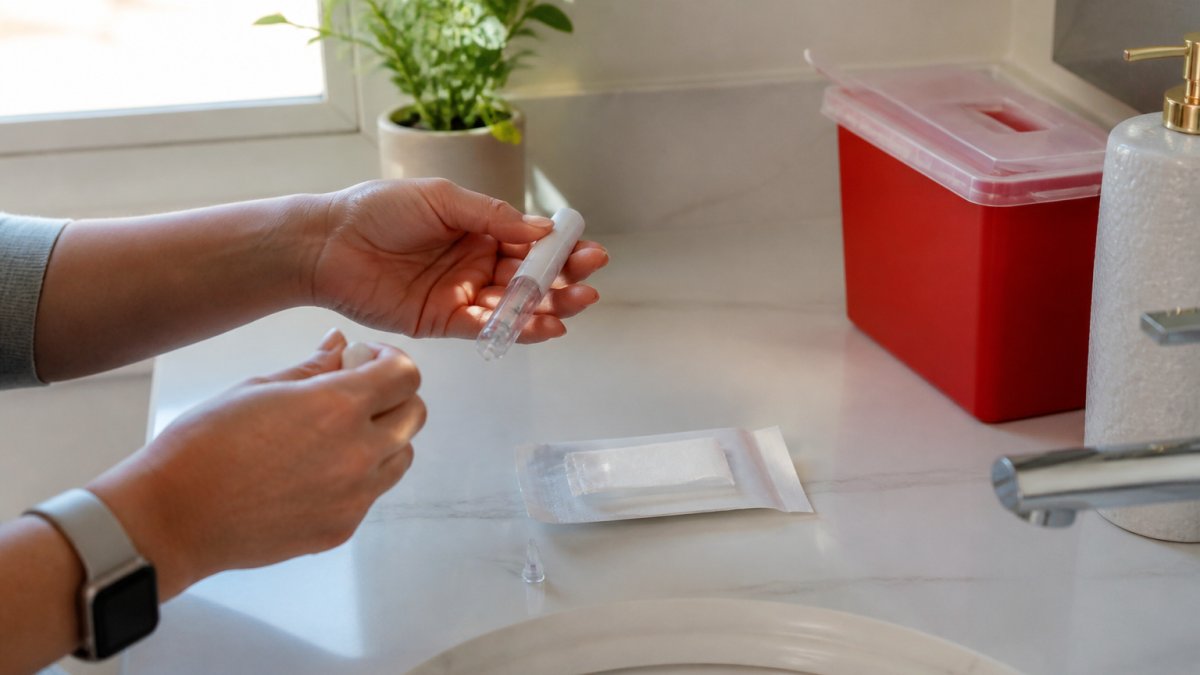
- Wash your hands and gather the pen, a new needle, and an alcohol swab.
- Check the pen label. Confirm the dose and the medication name every time.
- Choose your site and swab the skin. Let it dry fully.
- Insert the needle straight in, following the pen instructions.
- Press the button and hold until the dose completes.
- Remove the needle, dispose of it in a sharps container, and note the date.
Injection Sites and Site Rotation
The three approved injection sites are the abdomen, the front of the thigh, and the back of the upper arm. Rotate between them to prevent sore spots and uneven absorption. Our professional guide to tirzepatide injection sites covers optimal site selection and absorption in more detail.
- Abdomen: avoid a two-inch circle around the navel
- Thigh: front and outer area, sitting down makes it easier
- Upper arm: easiest with help from someone else
Move at least one finger’s width from your last injection spot.
Missed Tirzepatide Dose: What to Do and When to Wait
A missed dose is a scheduling problem, not an emergency, but the timing rule matters more than most guides admit. The general label-based approach for once-weekly tirzepatide is: if you remember within a few days of your scheduled day, take the missed dose as soon as you remember. If it is closer to your next scheduled dose, skip the missed one and resume your normal weekly schedule.
Never take two doses within the same week to “catch up.” Doubling up does not close the gap, and it raises the odds of nausea, vomiting, and other gastrointestinal side effects.
The Two Timing Scenarios
Most prescribers frame a missed dose as one of two situations:
- You are still inside the window. If your scheduled day was, say, Monday and you remember on Wednesday or Thursday, take the dose then. Your next injection stays on the original weekly day.
- You are outside the window. If you remember on Saturday or Sunday and your next dose is due Monday, skip the missed one. Take the next dose on Monday as usual.
A common pattern is a 3-to-4-day rule: if the gap between the missed dose and your next scheduled dose is longer than the gap since you missed it, take it; if not, skip it. Your prescriber’s instructions and the product labeling for your specific prescription take precedence over any general rule.
Worked Examples
| Scheduled Day | You Remember On | What Most Prescribers Advise |
|---|---|---|
| Monday | Wednesday | Take the missed dose Wednesday; resume Monday |
| Monday | Thursday | Take the missed dose Thursday; resume Monday |
| Monday | Saturday | Skip it; take the next dose Monday |
| Monday | Sunday | Skip it; take the next dose Monday |
Delayed vs. Missed
A delayed dose is one you take late but still within the same week, for example, two days after your usual day. A missed dose is one you skip entirely. Delayed doses usually do not require changing your weekly anchor day. Missed doses do not require a “reset” either; you simply resume the normal schedule.
When to Call Your Provider
Call before injecting if any of the following apply:
- You are unsure which side of the window you fall on
- You missed more than one dose in a row
- You have had significant nausea or vomiting in the past week
A common mistake is panicking and injecting the missed dose the day before the next one is due. That stacks medication and often makes the following days miserable. If you are unsure, wait and call, a one-week pause is safer than a double dose.
Changing Your Injection Day, Traveling, and Keeping a Weekly Routine
You can move your injection day, but the safe way to do it is to keep at least three days between the old dose and the new one, then lock in the new day going forward. That rule prevents accidental stacking and keeps the weekly rhythm intact.
A Simple Example Schedule
Suppose you normally inject on Monday evening and want to switch to Saturday morning:
- Week 1: Inject Monday as usual.
- Week 2: Wait until Saturday (five days later) and inject. You are now on Saturday.
- Week 3 onward: Inject every Saturday.
If the gap would be shorter than three days, for example, moving from Monday to Wednesday, wait a full week and start the new day the following week instead. Product labeling and your prescriber’s instructions should always be checked before changing the day.
Travel and Time Zones
Traveling does not break the schedule. A few practical habits keep it intact:
- Pack the pen in carry-on, not checked luggage. Cabin temperatures are more stable, and you avoid lost-luggage risk.
- Keep it at the storage temperature your pharmacy specifies. Most pens need refrigeration before first use; check the label for room-temperature limits after dispensing.
- Set a phone reminder in your destination’s time zone. A Monday 8 p.m. reminder at home becomes a Tuesday morning reminder if you cross enough zones, adjust it before you leave.
Worked Time-Zone Example
If you inject Monday at 8 p.m. Eastern and fly to a Pacific time zone, your usual 8 p.m. Eastern slot is 5 p.m. Pacific. Most patients simply inject at 5 p.m. local time on Monday and keep that as the new anchor for the trip. When you return home, you can either keep the Pacific anchor or shift back gradually using the three-day rule.
Keeping the Routine
Pick a day you will actually remember. Sunday evening works for many patients. So does the same weekday as your gym session. Pair the injection with an existing habit, a weekly meal prep, a Sunday walk, or a recurring calendar event, and the schedule holds itself.
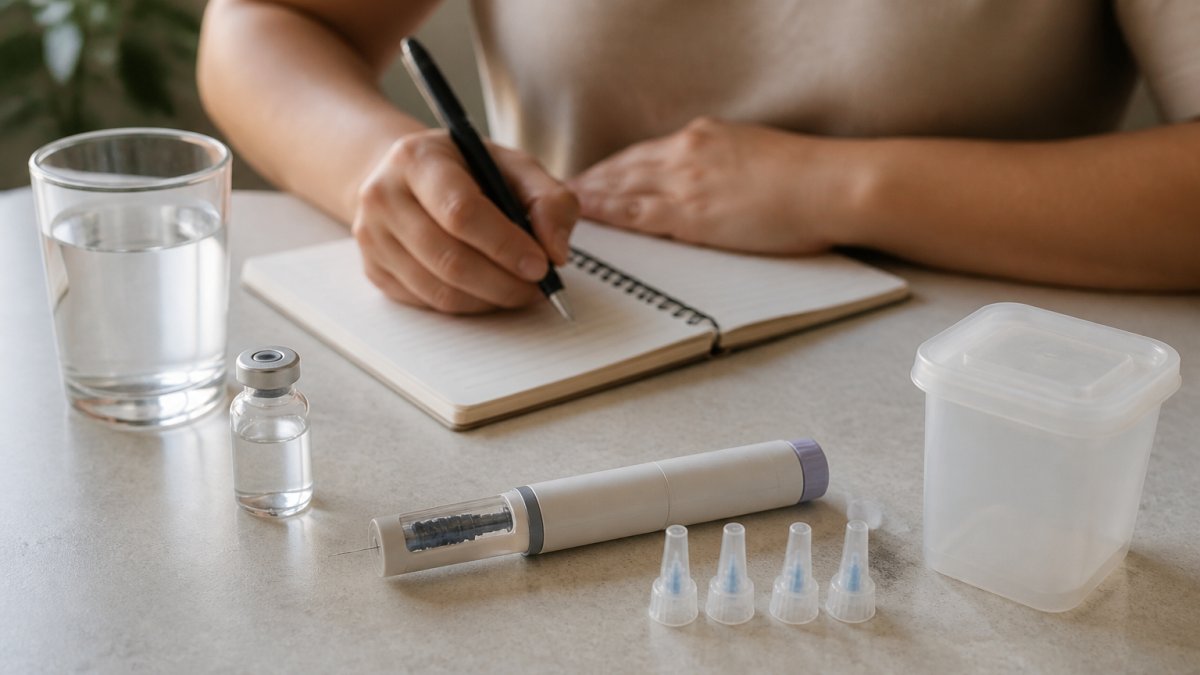
A simple paper log with the date, dose, and injection site takes ten seconds to fill in and makes missed doses and site rotation obvious at a glance.
Common Mistakes That Throw Off Your Weekly Dosing
The schedule is simple. The execution is where people slip.
- Injecting on a different day each week. Pick one day and stay on it.
- Skipping a dose because of mild nausea. Call your provider first. Skipping can restart the adjustment cycle.
- Ignoring side effects between doses. Persistent nausea or diarrhea is worth reporting. Our article on tirzepatide side effects in women covers what to watch for.
Starting Your Tirzepatide Program with Medical Supervision
MedShape Weight Loss Clinics provides physician-supervised programs built around compounded tirzepatide and semaglutide, with board-certified physicians and nutrition specialists shaping each plan. Telemedicine is available nationwide, which makes the weekly routine easier to hold to.
You can explore our medical weight loss programs.
Frequently Asked Questions
Can you take tirzepatide injections more than once a week?
No. Tirzepatide is designed as a once-weekly injection, and the label does not support taking it more often. The medication is long-acting, so a weekly dose keeps levels steady. Taking extra doses will not speed up weight loss and raises the risk of nausea, diarrhea, and other side effects. If you feel your current prescribed dose is not working, talk to your healthcare provider about dose escalation at your next follow-up rather than changing the schedule yourself.
What day of the week should you take your tirzepatide injection?
Pick any day that you can repeat every seven days. Most people choose a day that fits their routine, such as a Saturday morning or a weekday evening after work. The key is consistency, not the specific day. Once you settle on an injection day, mark it on your calendar and set a phone reminder. If you need to move it, you can change the day as long as at least 72 hours pass between doses, per guidance from your prescriber.
What should you do if you miss a tirzepatide dose?
Take the missed dose as soon as you remember, as long as your next scheduled dose is more than 72 hours away. If it is fewer than 72 hours until your next dose, skip the missed one and resume your regular weekly schedule. Never double up to catch up. After a missed dose, watch for side effects like nausea when you restart, and let your healthcare provider know so they can adjust your tirzepatide injection schedule if needed.
Does the tirzepatide dose increase every week?
No. Dose escalation happens in steps, not every week. Most patients start at 2.5 mg once weekly for four weeks, then move up in 2.5 mg increments roughly every four weeks based on tolerability, blood glucose, and weight response. The maximum recommended dose is 15 mg once weekly. Your provider decides the pace at each follow-up visit. Staying on a lower dose longer is common if side effects are uncomfortable, so the schedule is personalized rather than automatic.
The weekly rhythm is the easy part. Getting the dose right, spotting side effects early, and adjusting safely is where medical supervision earns its place. MedShape Weight Loss Clinics combines board-certified physicians, customized treatment plans, and a signature tirzepatide with B12 blend to support steady, monitored progress. Get started with MedShape Weight Loss Clinics and build a weekly routine that actually holds.