Skip to content

Table of Contents
- What Fast Weight Loss Meal Plans Can Realistically Do
- Building a 7-Day Meal Plan for Weight Loss
- Calorie Targets and Portion Sizes: The Numbers Behind the Plan
- Meal Prep for Weight Loss: A 2-Hour Sunday Workflow
- Your Weekly Meal Plan for Weight Loss: How to Repeat It Without Boredom
- Scaling to a 14-Day Meal Plan for Weight Loss
- Tracking Progress Beyond the Scale and Maintaining Results
- Frequently Asked Questions
Last Updated: October 17, 2026
What Fast Weight Loss Meal Plans Can Realistically Do
Fast [weight loss](/semaglutide-dosing-for-weight-loss-2026-clinical-guide/) meal plans work best when they combine a clear calorie target, enough protein and fiber to control hunger, and a schedule you can actually repeat. At MedShape Weight Loss Clinics, we build these plans around whole foods first, then adjust portions to the individual. That structure matters more than any single “miracle” ingredient.
What Counts as Fast but Safe Weight Loss
Safe fast weight loss generally means losing roughly 1 to 2 pounds per week, a range widely cited in clinical guidance from sources such as the CDC’s healthy weight loss guidance. Faster drops usually reflect water loss, not fat. A meal plan that leaves you constantly hungry or lightheaded is not working, it is just unsustainable.
Building a 7-Day Meal Plan for Weight Loss
A 7-day meal plan for weight loss is a repeating weekly schedule of breakfasts, lunches, dinners, and snacks built around a fixed calorie target. The goal is variety within structure: enough repetition to make grocery shopping easy, enough rotation to keep you from quitting by Thursday.
Here is the framework we use:
- Pick a protein anchor for each meal (eggs, chicken, fish, Greek yogurt, tofu).
- Add a fiber source (vegetables, beans, berries, whole grains).
- Set the portion using your calorie target, not guesswork.
- Fill the gap with a planned snack so hunger does not decide for you.
Breakfast, Lunch, and Dinner Ideas That Travel Well
- Breakfast: Greek yogurt with berries and nuts; veggie omelet with whole-grain toast; overnight oats with chia.
- Lunch: Grilled chicken salad with olive oil; turkey and hummus wrap; lentil soup with a side of fruit.
- Dinner: Baked salmon with roasted vegetables; lean beef stir-fry with brown rice; chicken and bean chili.
Snacks Between Meals
Plan two snacks a day, roughly 150 to 200 calories each: apple with peanut butter, cottage cheese with cucumber, a handful of almonds, or a protein shake. Planned snacks reduce impulse eating, which is where most plans quietly fall apart.
Calorie Targets and Portion Sizes: The Numbers Behind the Plan
Most generic plans hand you a single calorie number and call it a day. That is the fastest way to build a plan that fits almost no one. A better approach is to show the math, state the assumptions, and give you portions you can adjust as your body responds.
How to Estimate Your Starting Calorie Target
A common, transparent method is the Mifflin-St Jeor equation, which estimates resting energy expenditure from weight, height, age, and sex, then multiplies by an activity factor. You do not need to run it by hand to use the output, but knowing where the number comes from keeps you from treating it as gospel.
A practical shortcut most practitioners use:
- Estimate maintenance calories from body weight and activity level. A rough starting point is 13 to 15 calories per pound of body weight for moderately active adults, adjusted down for sedentary days and up for training days.
- Subtract a moderate deficit of roughly 500 calories per day, which aligns with the commonly cited 1 to 2 pounds per week of safe loss.
- Set a floor. Most adults should not drop below about 1,200 calories per day without clinical supervision, and athletes or larger bodies need more.
- Recheck every two to three weeks. As weight drops, maintenance calories drop too, so the target has to move with you.
These are starting estimates, not prescriptions. Energy needs vary with body composition, medications, thyroid function, and activity, which is why a calculator is a starting point and a clinician is the backstop.
Portion Sizes You Can Actually See
Numbers on a label are abstract; hand and plate comparisons are not. A workable plate method for weight loss:
- Half the plate: non-starchy vegetables (broccoli, peppers, spinach, zucchini).
- One quarter: a palm-sized portion of protein (about 3 to 4 ounces cooked chicken, fish, tofu, or Greek yogurt).
- One quarter: a cupped-hand portion of starch (about 1/2 to 1 cup cooked rice, potatoes, or beans).
For snacks, a 150 to 200 calorie target translates roughly to an apple with 1 tablespoon of peanut butter, 3/4 cup of cottage cheese with cucumber, or 1 ounce of almonds.
A Worked Example
Take a 180-pound adult who is moderately active. Maintenance lands near 2,400 to 2,700 calories depending on activity. A 500-calorie deficit puts the target around 1,900 to 2,200. At that target, a day might look like:
| Meal | Example | Approx. calories |
|---|---|---|
| Breakfast | Greek yogurt (1 cup), berries (1/2 cup), almonds (1 oz) | 350 |
| Lunch | Grilled chicken (4 oz), salad with olive oil (1 tbsp), fruit | 450 |
| Snack | Apple with peanut butter (1 tbsp) | 200 |
| Dinner | Baked salmon (5 oz), roasted vegetables, brown rice (1/2 cup) | 550 |
| Snack | Cottage cheese (3/4 cup) with cucumber | 150 |
| Total | ~1,700 |
That leaves room to scale portions up or down by 100 to 200 calories depending on hunger and results. The point is not the exact number; it is that every portion has a reason behind it.
Why One Number Does Not Fit Everyone
Two people at the same weight can have different maintenance needs because of muscle mass, activity, sleep, and medical history. Anyone with diabetes, kidney disease, thyroid conditions, or who takes medications that affect appetite or blood sugar should have targets set with a clinician rather than a calculator. A plan built for someone else’s body is not a plan for yours.
Weigh and measure for the first two weeks, then switch to hand and plate portions once you can eyeball them. Precision early builds the skill; eyeballing later keeps the plan livable.
::: (Source: the U.S. Department of Agriculture’s MyPlate guidelines)
Meal Prep for Weight Loss: A 2-Hour Sunday Workflow
Meal prep for weight loss is the practice of cooking and portioning several days of food in one session so daily decisions get easier. The goal is not to cook seven identical meals; it is to build components you can recombine so weeknight dinners take ten minutes instead of forty.
What to Buy: A Component-Based Shopping List
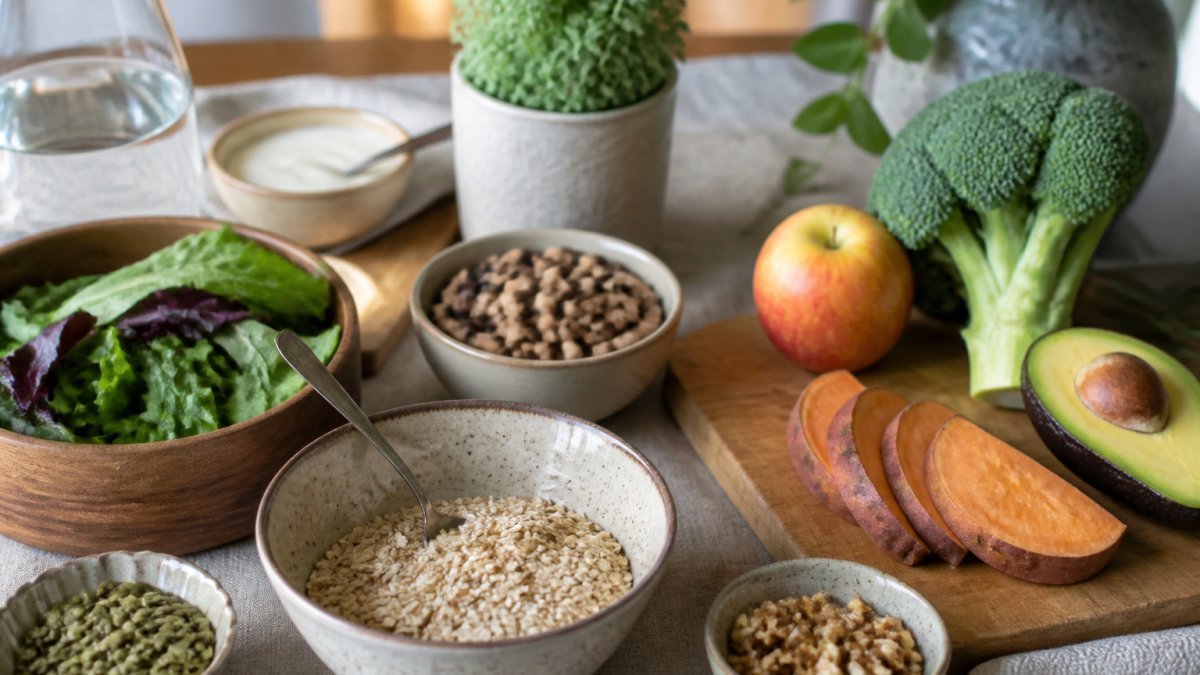
Build your list from components, not finished recipes. For one person for one week, a workable baseline:
- Proteins (about 4 to 5 pounds total): chicken breast or thighs, ground turkey, salmon or another fish, eggs, Greek yogurt, tofu.
- Vegetables (about 6 to 8 cups raw): broccoli, bell peppers, spinach, zucchini, carrots, onions.
- Starches: brown rice, potatoes or sweet potatoes, whole-grain bread or tortillas, lentils or beans.
Organize the list by grocery section (produce, protein, dairy, pantry) so you shop in one pass rather than backtracking.
The 2-Hour Workflow, With Timing
- Shop with the list (about 30 minutes). Buy proteins and produce first, pantry last.
- Start the oven and the rice cooker (0 to 10 minutes). Preheat to 425°F, start rice, and set a pot of water for eggs.
- Batch-cook proteins (10 to 45 minutes). Season chicken and salmon, roast on sheet pans; brown ground turkey in a skillet; boil eggs. Aim for 4 to 6 ounces of cooked protein per dinner portion.
- Roast vegetables (15 to 45 minutes). Toss broccoli, peppers, and zucchini with olive oil and salt; roast in a single layer so they brown instead of steam.
- Cook one grain and one soup or chili (20 to 50 minutes). A pot of chili or lentil soup covers two lunches and freezes well.
- Portion into containers (45 to 60 minutes). Use a scale for the first two weeks, then switch to the plate method. Label with the date.
- Cool, label, and store (60 to 90 minutes). Refrigerate what you will eat in three to four days; freeze the rest.
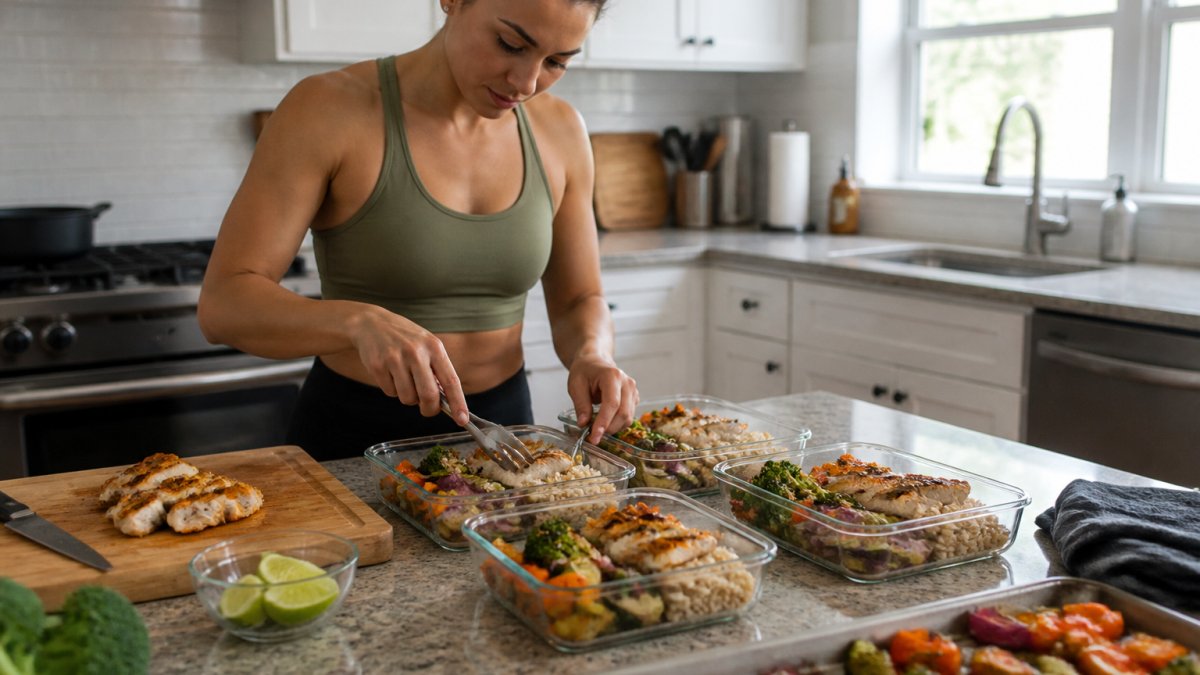
Establishing this consistent rhythm of preparation makes it easier to transition toward specialized dietary frameworks like keto meal planning when you want to shift your metabolic focus.
Storage Timelines and Reuse
Cooked proteins keep about three to four days refrigerated and freeze well for two to three months. Cooked grains keep three to four days; cooked vegetables keep three to five.
The real payoff is reuse. Roasted chicken becomes a salad on Monday, a wrap on Tuesday, and a stir-fry on Wednesday. A pot of chili covers two lunches and one dinner.
Portion food into containers before you sit down to eat. Pre-portioned containers remove the second-helping decision entirely, which is where most weekly plans lose their calorie target.
Cool cooked food promptly and refrigerate within two hours. Reheat leftovers to steaming hot, and discard anything that has sat out or passed its storage window. Food safety is part of the plan, not an afterthought.
Your Weekly Meal Plan for Weight Loss: How to Repeat It Without Boredom
A weekly meal plan for weight loss only works if week three looks different from week one. Rotate proteins (chicken, fish, eggs, beans), swap cuisines (Mediterranean, Mexican, Asian-inspired), and keep two “flex” dinners for eating out or leftovers. Keep breakfast and lunch largely fixed, and vary dinner. That balance cuts decision fatigue without turning meals into a rut.
| Day | Breakfast | Lunch | Dinner | Snack |
|---|---|---|---|---|
| Monday | Greek yogurt and berries | Chicken salad | Baked salmon and vegetables | Apple and almonds |
| Tuesday | Veggie omelet | Turkey wrap | Beef stir-fry and rice | Cottage cheese |
| Wednesday | Overnight oats | Lentil soup | Chicken chili | Protein shake |
| Thursday | Eggs and toast | Leftover chili | Grilled fish and greens | Cucumber and hummus |
| Friday | Yogurt and nuts | Chicken salad | Flex meal | Fruit and peanut butter |
Scaling to a 14-Day Meal Plan for Weight Loss
A 14-day meal plan for weight loss doubles the rotation so you shop and prep every two weeks instead of weekly. Repeat week one, then swap proteins and cuisines in week two. This longer cycle reduces shopping trips and makes batch cooking more efficient. For anyone considering medication-assisted care, our team at MedShape Weight Loss Clinics pairs these plans with physician supervision so nutrition and treatment work together.
Personalizing for Dietary Needs and Medical Conditions
Personalization is where generic plans fail. People with diabetes need carbohydrate distribution set carefully. Those with hypothyroidism or kidney conditions need clinician input on protein and iodine. Vegetarians need plant protein sources planned deliberately. A plan built for someone else’s body is not a plan for yours.
Cutting calories too aggressively without supervision can cause muscle loss, fatigue, and nutrient gaps. If you take medication for diabetes or blood pressure, changing your diet can change your dosing needs, so loop in your clinician first.
Tracking Progress Beyond the Scale and Maintaining Results
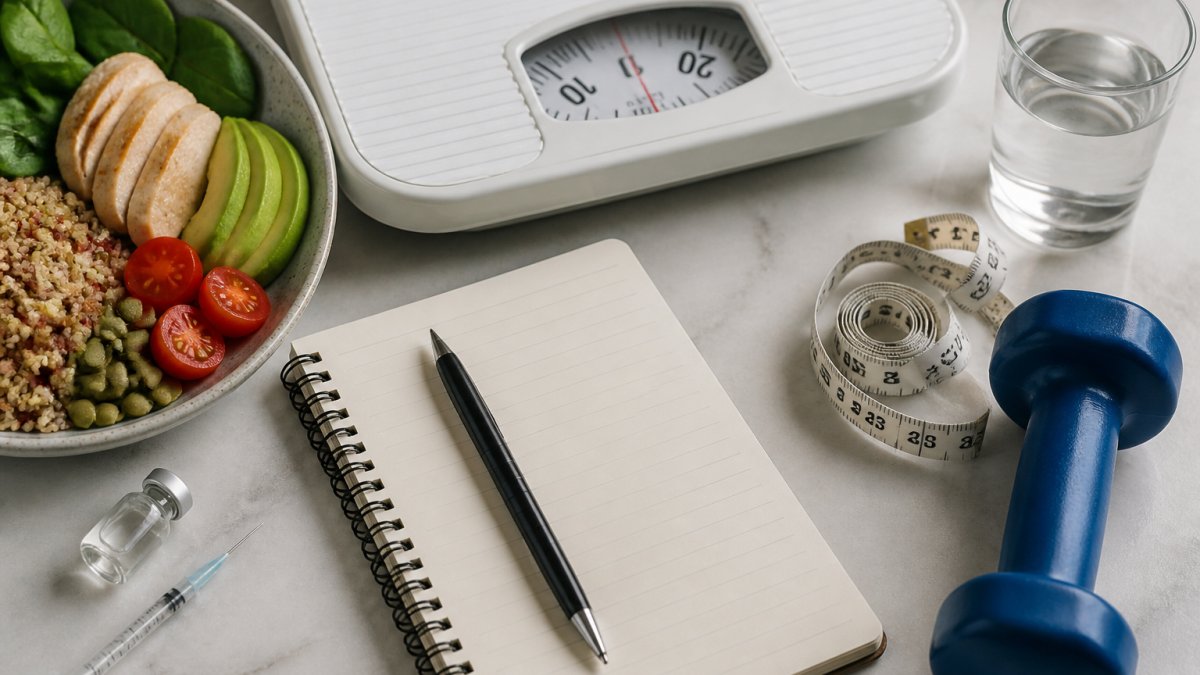
Track more than weight: waist measurement, energy levels, sleep quality, strength gains, and how clothes fit. Weight fluctuates daily with water and sodium, so weekly averages tell the real story. Maintenance deserves the same planning as loss.
Fast weight loss is possible without crash dieting, but it needs structure, realistic calorie targets, and a plan you can repeat past week two.
Frequently Asked Questions
How much weight can I lose in a week on a fast weight loss meal plan?
Most people lose 1 to 2 pounds per week on a calorie-controlled plan with whole foods, adequate protein, and consistent activity. Larger losses in week one are often water weight rather than fat. Anything faster than about 2 pounds weekly is hard to sustain and should be supervised by a clinician, especially if you have pre-diabetes, hypothyroidism, or take medication. A 7-day meal plan for weight loss sets the structure; the rate of loss depends on your starting weight, calorie target, and how closely you follow it.
How do I meal prep for weight loss without eating the same thing all week?
Batch cook components rather than finished meals. Roast two proteins, cook a grain, and prep three vegetables, then mix them into different bowls, wraps, and salads across the week. Keep sauces and dressings separate so textures hold up. This approach cuts prep time to about two hours on Sunday and keeps variety high. Portion into containers right after cooking so you are not measuring when you are hungry, which is when portions tend to grow.
Can a 7-day meal plan help with weight loss if I have a medical condition?
A structured plan can help, but it needs adjustment for conditions like pre-diabetes, hypothyroidism, or menopause-related metabolic changes. Carb distribution, protein targets, and medication timing all affect results. General plans found online do not account for labs, prescriptions, or how your body responds. A clinician-supervised program can tailor calorie targets and food choices to your health history, which is safer than following a generic menu when a diagnosed condition is involved.
What should I eat for breakfast, lunch, and dinner to lose weight?
Build each meal around protein, fiber, and a measured portion of complex carbs. Breakfast: Greek yogurt with berries and chia, or eggs with spinach and whole-grain toast. Lunch: grilled chicken or lentils over greens with olive oil and vinegar. Dinner: baked fish or lean beef with roasted vegetables and a half-cup of rice or quinoa. Keep added sugars low and eat whole foods most often. These meals fit a calorie-controlled plan and keep hunger manageable between meals.
How do I keep weight off after a fast weight loss meal plan ends?
Transition to a maintenance calorie level gradually rather than returning to old habits. Keep the meal prep routine, protein targets, and grocery planning that worked during the plan. Track progress with waist measurements, energy levels, and strength gains, not just scale weight, since water fluctuations can mask fat loss. Most people who maintain results continue some form of structured eating and regular check-ins. A clinician can help you set a maintenance target and adjust if weight starts creeping back.