Skip to content


Last Updated: November 2, 2026
Quick Summary
Peptides are short chains of amino acids that act as signaling molecules, and more than 100 are FDA-approved for medical use. Approved peptide drugs like semaglutide and tirzepatide require a prescription and medical supervision, while unapproved injectable peptides sold online lack verified identity, purity, and sterility.
- Peptides typically contain fewer than 50 amino acids, while proteins are longer folded molecules.
- GLP-1 receptor agonists such as semaglutide, tirzepatide, and liraglutide are FDA-approved for weight management.
- AOD 9604 is marketed for fat loss but has not cleared FDA review for weight loss.
- Most oral peptides are broken down in the digestive tract before reaching the bloodstream.
- Read labels for prescription, compounded, dietary supplement, or research use only wording plus dose, purity, and source.
Table of Contents
- What Peptides Are and How They Differ From Proteins
- How Peptides Work in the Body: Hormones and Cell Signaling
- Peptides for Weight Loss: What the Evidence Actually Shows
- Peptide Injections: Route-Specific Risks and What Medical Supervision Changes
- Peptides Supplements: Why Oral Products Need Extra Scrutiny
- Peptides Skin Care: Collagen, Cell Proliferation, and Realistic Claims
- FDA-Approved vs. Unapproved Peptides: Reading the Label Correctly
- Starting a Medically Supervised Weight Loss Consultation
- Frequently Asked Questions
What Peptides Are and How They Differ From Proteins
Peptides are short chains of amino acids linked by peptide bonds, and they function as signaling molecules that tell the body what to do rather than serving as structural building blocks. That size difference changes everything about how they behave in the body. (Source: FDA-approved for medical use)
The distinction matters because it determines whether a compound works as a drug, a cosmetic ingredient, or a supplement with no proven benefit. More than 100 peptides are FDA-approved for medical use.
Here is the practical version: a peptide is a short chain of amino acids that acts as a signal. A protein is a long chain that builds tissue. A supplement pill claiming to deliver either one intact is making a claim that biology usually refuses to honor.
Amino Acids, Peptide Bonds, and Chain Length
Amino acids are the individual units. A peptide bond is the chemical link that joins one amino acid to the next. Chain length then determines the category:
- Dipeptides and tripeptides: 2-3 amino acids, often used in skin care
- Oligopeptides: 4-20 amino acids, common in cosmetic formulations
- Polypeptides: 20-50 amino acids, approaching protein territory
- Proteins: generally over 50 amino acids, folded into functional shapes
That sequence matters more than the category name. Two peptides with identical length can behave completely differently depending on the order of their amino acids. This is why “collagen peptide” on a label tells you almost nothing about what the product actually does.
How Peptides Work in the Body: Hormones and Cell Signaling
Peptides work by binding to receptors on cell surfaces, triggering a response inside the cell without entering it. This is cell signaling in its simplest form: the peptide is the message, the receptor is the mailbox, and the tissue is the recipient.
Peptides are found throughout the body and come in many thousands of types, and many act as hormones.
That hormonal role is where peptides become serious medicine. Insulin is a peptide hormone. GLP-1 is a peptide hormone (ncbi.nlm.nih.gov).
Peptides for Weight Loss: What the Evidence Actually Shows
The strongest evidence for peptides for weight loss centers on GLP-1 receptor agonists, which mimic a gut hormone that slows gastric emptying and reduces appetite through hypothalamic signaling. These are FDA-approved prescription medications with large randomized trial data behind them. Everything else marketed as a weight-loss peptide sits on a much weaker evidence base, and the gap between those two tiers is where most consumer confusion lives.
The Approved Tier
The approved GLP-1 and dual-agonist products share a mechanism but differ in formulation:
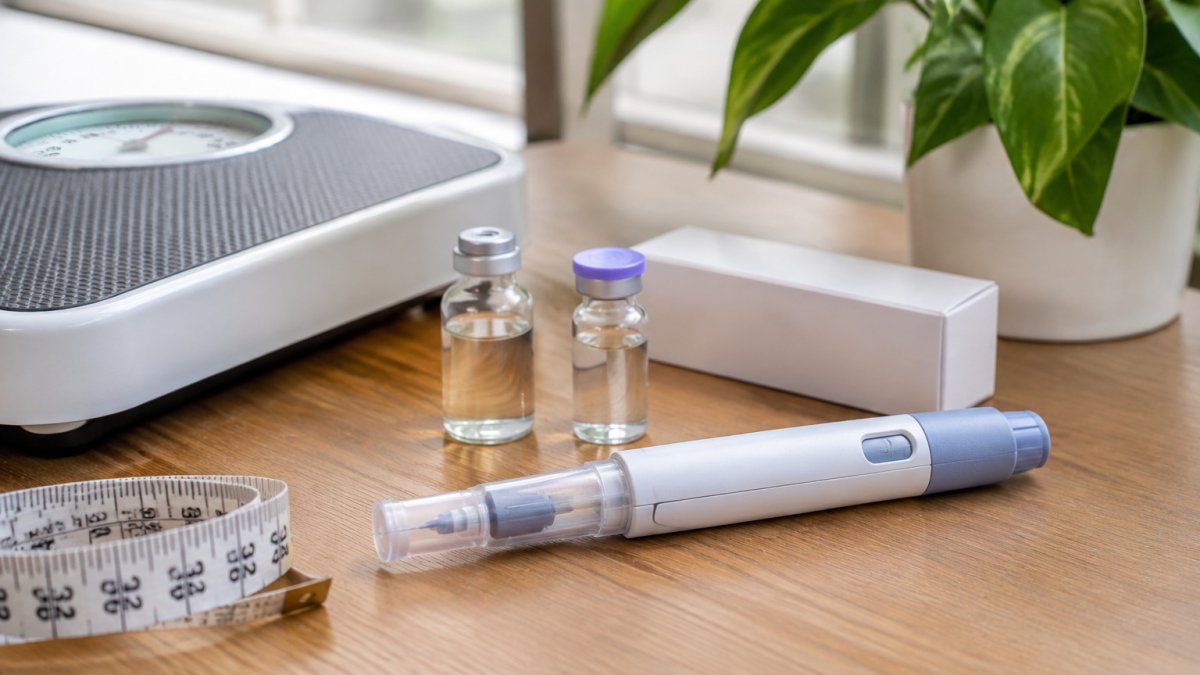
- Semaglutide is approved as a once-weekly subcutaneous injection for chronic weight management and as an oral tablet for type 2 diabetes.
- Tirzepatide is a dual GIP/GLP-1 receptor agonist approved for both type 2 diabetes and chronic weight management.
- Liraglutide is the older daily GLP-1 agonist approved for weight management.
The Investigational Tier
That is a slow, rigorous process, and it is the filter that separates medicine from marketing. Compounds in this tier may eventually clear review, but until they do, the evidence is early-stage and the marketing often runs ahead of the data.
The Weak-Evidence Tier
Several peptides are marketed for fat loss with little or no randomized human data supporting the claim. AOD 9604, a fragment of human growth hormone, is the most common example; it is discussed in the research literature but has not cleared FDA review for weight loss. Other compounds sold as “fat-burning peptides” typically rest on small studies, animal data, or mechanistic reasoning rather than outcome trials.
How to Read a Weight-Loss Peptide Claim
Ask three questions of any product or program: Is the compound FDA-approved for weight management, and if so, at what dose and for which indication? Is the evidence a randomized trial with a body-weight endpoint, or a mechanistic or animal study? And who is monitoring the patient during treatment? A claim that survives all three questions is worth discussing with a clinician.
Watch out: a product marketed as a “peptide” for weight loss that is sold without a prescription and without a clinician is almost always in the weak-evidence tier, regardless of how the label is worded.
Peptide Injections: Route-Specific Risks and What Medical Supervision Changes
Injection carries risks that oral and topical routes do not: infection at the site, dosing errors, and allergic reactions that escalate quickly.

What most guides miss is that the injection itself is rarely the problem.
A common mistake is treating a lower price as a signal of value. With injectables, an unverified source is a gamble on contamination, not a bargain.
Peptides Supplements: Why Oral Products Need Extra Scrutiny
Oral peptide supplements face a basic biological obstacle: most peptides are broken down in the digestive tract before they reach the bloodstream. A pill promising systemic peptide effects is fighting digestion itself, and few oral products clear that bar.
That does not make every oral product worthless. You can browse the clinic’s peptides supplements to see which peptides are offered and how they are positioned.
Peptides Skin Care: Collagen, Cell Proliferation, and Realistic Claims
Topical peptides have the most defensible cosmetic evidence of any non-prescription category. Research published through the National Institutes of Health identifies peptides as active ingredients that improve collagen synthesis, enhance skin cell proliferation, and decrease inflammation.
Improved collagen synthesis is not the same as erased wrinkles, and results depend on the peptide actually penetrating the skin.
FDA-Approved vs. Unapproved Peptides: Reading the Label Correctly
“FDA-approved” means a specific product, at a specific dose, for a specific indication has cleared the agency’s review. It does not mean the peptide molecule is approved in general, and it certainly does not transfer to a different vial sold under a similar name. That single distinction explains most of the confusion in this category, because the same peptide name can appear on four very different kinds of product.
The Four Regulatory Buckets
Nearly every peptide product you encounter falls into one of these categories, and the label language tells you which one:
- FDA-approved prescription drug. The manufacturer filed a new drug application or biologics license application, and the FDA reviewed identity, purity, potency, sterility, and clinical data for a named indication. Examples include semaglutide (Ozempic, Wegovy, Rybelsus), tirzepatide (Mounjaro, Zepbound), liraglutide (Victoza, Saxenda), insulin analogs, and the GLP-1/glucagon dual agonist survodutide in its approved uses. These products carry a prescribing information document, a black-box warning where applicable, and a defined supply chain.
- Compounded preparation. A licensed pharmacy combines or alters ingredients to fill a prescription when an approved product is unavailable or clinically unsuitable. Compounded semaglutide and tirzepatide became widespread during shortage periods. Compounding is legal under federal law and state pharmacy boards, but a compounded product is not FDA-approved, and its potency and purity depend on the compounding pharmacy’s practices and testing.
- Dietary supplement. Sold under the Dietary Supplement Health and Education Act framework. Supplements are not pre-approved by the FDA for safety or efficacy before marketing, and the manufacturer is responsible for labeling accuracy. A pill or capsule labeled as a peptide supplement is in this bucket, which is why the dose, purity, and source usually go unstated.
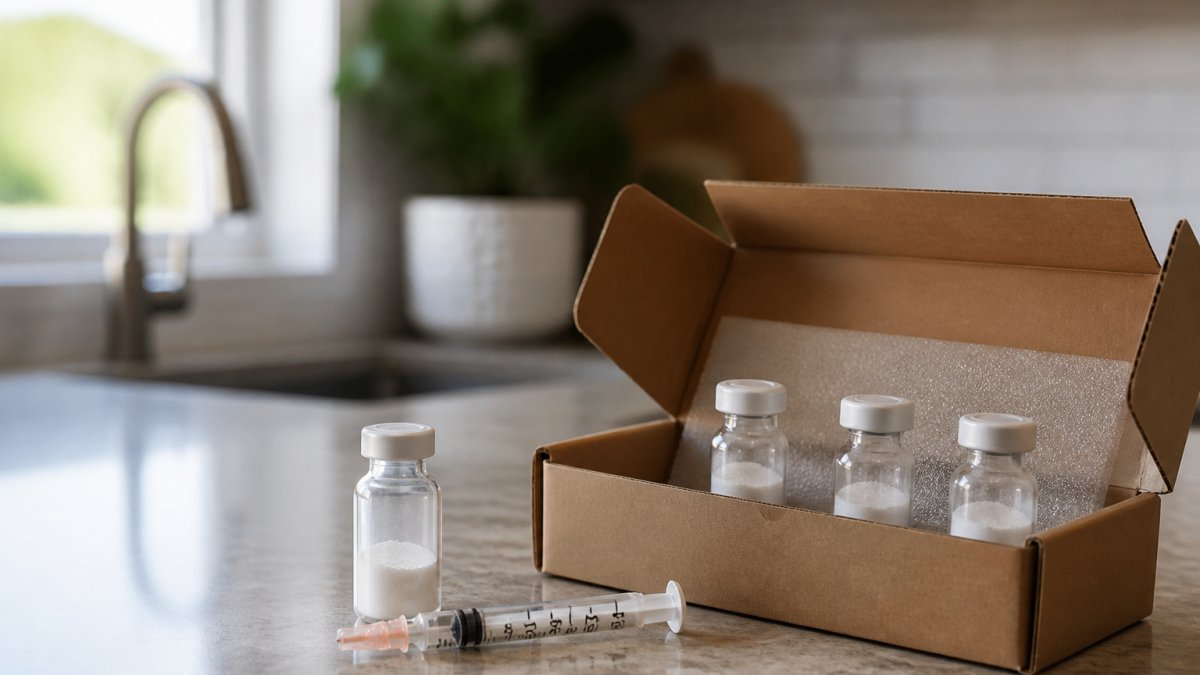
- “For research use only” (RUO). A labeling designation that means the product is not intended for human or veterinary use. RUO vials sold online are the source of most of the unapproved injectable peptides in circulation. The label itself is a disclaimer, not a quality guarantee, and RUO products are not manufactured under drug good manufacturing practice.
What the Label Actually Tells You
Read the fine print in this order: the words “prescription,” “compounded,” “dietary supplement,” or “for research use only”; the dose per unit (mg per vial, mg per capsule, or mg per mL); the purity statement and whether it is tied to a certificate of analysis; the manufacturer or compounding pharmacy name and license number; and the storage instructions.
Watch out: a certificate of analysis is only meaningful if it comes from an independent laboratory and matches the lot number on the vial. A PDF with no lot number attached proves nothing about the product in your hand.
The Shifting Regulatory Picture
The FDA maintains a Category 2 list of bulk drug substances that raise significant safety risks and are not eligible for compounding. Removal from Category 2 does not make a peptide FDA-approved; it changes whether a compounding pharmacy may use the bulk substance under specified conditions. That is a narrow regulatory distinction, and it is routinely misread in marketing as “now legal” or “now approved.”
Nearly every peptide product falls into one of four regulatory buckets, and the label language tells you which one.
| Regulatory bucket | What it means | Examples or notes |
|---|---|---|
| FDA-approved prescription drug | Specific product, dose, and indication cleared FDA review | Semaglutide, tirzepatide, liraglutide, insulin analogs |
| Compounded preparation | Pharmacy combines or alters ingredients to fill a prescription | Not FDA-approved; potency depends on pharmacy practices |
| Dietary supplement | Sold under DSHEA; not pre-approved by FDA | Dose, purity, and source usually go unstated |
| “For research use only” (RUO) | Not intended for human or veterinary use | Source of most unapproved injectable peptides online |
Starting a Medically Supervised Weight Loss Consultation
The gap between a peptide that works and a peptide that sells is supervision.
Our medically supervised weight loss program is built around that premise. We specialize in compounded Tirzepatide and Semaglutide, including a signature Tirzepatide with B12 blend, as a cost-effective alternative to name-brand medications.
Peptides are not a shortcut. They are tools that work when the compound is verified and the patient is watched. That is the whole argument.
Frequently Asked Questions
What does taking peptides do for you?
It depends entirely on which peptide. Over 100 peptides are FDA-approved for medical use, and each one has a specific job: some act as hormones, others influence cell signaling, tissue repair, or inflammation. Peptides, like protein, can do many things in the body and exist in many forms. Unapproved products marketed online often make broad claims without matching clinical evidence, so the effect you get depends on the molecule, the dose, and whether the product is what the label says.
Are peptides the same as Ozempic?
No. Ozempic is a brand-name prescription drug built on a specific peptide, semaglutide, that acts on GLP-1 receptors. Peptides as a category include hundreds of unrelated molecules with different targets. Some peptides for weight loss work on GLP-1 signaling; most do not. Treating every peptide as interchangeable with a GLP-1 medication is a common mistake, and it matters because approval status, dosing, and side effect profiles differ by product, not by category.
What are the negatives of taking peptides?
The main concerns are safety and regulation. The American Medical Association cautions that many peptides sold online lack FDA approval, which raises contamination and dosing risks. Other negatives include injection-site reactions, cost, and the fact that unapproved products carry no guaranteed quality control. Anyone considering peptide therapy should discuss risks and monitoring with a licensed physician.
Do peptides help with weight loss?
Some do, with caveats. GLP-1-based peptides are the most studied for weight loss, and Peptides for weight loss sold without a prescription, however, have not gone through that review. A medically supervised program that includes lab work, dosing oversight, and follow-up gives you a clearer picture of whether a specific peptide fits your health history than an online listing does.
If you have been piecing together a plan from online vendors and forum advice, the missing piece is a clinician who knows your history. MedShape Weight Loss Clinics offers physician-supervised programs with customized protocols, compounded Tirzepatide and Semaglutide options, and telemedicine visits across all 50 states. Get started with MedShape Weight Loss Clinics and build a plan that is monitored, adjusted, and grounded in evidence rather than a label claim.