Skip to content


Quick Summary
Compounded GLP-1 dosing errors are mistakes in how much medication a person injects, and they can cause serious side effects. The FDA has received hundreds of adverse-event reports tied to compounded semaglutide, and some patients have taken doses up to 20 times higher than intended.
- Compounded medications often come in multidose vials, which makes measuring doses with a syringe error-prone.
- Read the prescribed dose in mg, the vial concentration in mg/mL, and the total vial volume as separate facts.
- Calculate the volume by dividing the prescribed mg dose by the concentration before checking the syringe marks.
- Confirm the syringe type, such as U-100 or U-40, matches your calculation before drawing any dose.
- Call Poison Help at 1-800-222-1222 and your prescriber if you suspect an overdose, even if you feel normal.
Table of Contents
- Why Compounded GLP-1 Dosing Errors Happen
- Compounded Semaglutide Dosing: Why Concentrations Vary
- Compounded GLP-1 Syringe Instructions: A Safe Step-by-Step Method
- Step 1: Read the prescription and the vial label side by side
- Step 2: Calculate the volume, not the units, first
- Step 3: Match the volume to your syringe’s markings
- Step 4: Run a pre-injection checklist every time
- Step 5: Draw slowly and verify before injecting
- Step 6: Log the dose and the concentration
- Common Dosing Error Scenarios to Watch For
- Tirzepatide Overdose Symptoms and Warning Signs
- What to Do If You Suspect a Dosing Error
- Booking a Medication Review at MedShape Weight Loss Clinics
- Frequently Asked Questions
Compounded GLP-1 dosing errors are a real and documented safety problem, and the FDA has flagged them repeatedly.
Compounded GLP-1 dosing errors are mistakes in how much medication a person injects, and they can cause serious side effects. The FDA reports that patients have administered compounded semaglutide doses up to 20 times higher than intended FDA’s Concerns with Unapproved GLP-1 Drugs Used for Weight Loss.
Why Compounded GLP-1 Dosing Errors Happen
Most errors start with the product itself. Compounded medications are made by pharmacies rather than manufacturers, and they often come in multidose vials instead of prefilled pens. Measuring from a vial leaves room for mistakes.
The FDA had received more than 455 adverse-event reports tied to compounded semaglutide as of July 2024 FDA alert on dosing errors with compounded injectable semaglutide. That number has grown since then.
Three common causes stand out:
- Vial-based measuring. Patients draw doses from a vial using a syringe, which is easy to get wrong.
- Unit confusion. Doses may be written in milligrams, but syringes are marked in units.
- Provider miscalculation. Errors can also come from the prescriber or compounder, not just the patient.
Milligrams, Milliliters and Syringe Units Explained
A milligram (mg) measures how much drug is in the dose. A milliliter (mL) measures liquid volume. A syringe unit is a marking on the syringe. The same dose can look very different depending on the medication’s concentration. A 5 mg dose from a stronger vial takes less liquid than the same 5 mg from a weaker one. For a step-by-step explanation of these conversions, read the tirzepatide dosing guide in units.
Compounded Semaglutide Dosing: Why Concentrations Vary
Compounded semaglutide is not one standard product. Compounding pharmacies can mix different strengths, so the amount of drug per milliliter can differ from one batch or pharmacy to another. Compare your prescription against the semaglutide dosage schedule for weight loss.
Compounded medications also lack some safety features. One case series found that compounded vials lack the protections built into prefilled manufactured pens Administration errors of compounded semaglutide reported to a poison control center.
Compounded GLP-1 Syringe Instructions: A Safe Step-by-Step Method
No universal conversion exists for compounded GLP-1 medications, because the concentration on the label changes from one pharmacy, batch, and vial to the next. Any guide that hands you a fixed “units per mg” number is unsafe. What follows is a method for reading your own prescription and syringe correctly, not a conversion table. Confirm every number with your prescriber or pharmacist before your first injection, and again whenever you start a new vial.
Step 1: Read the prescription and the vial label side by side
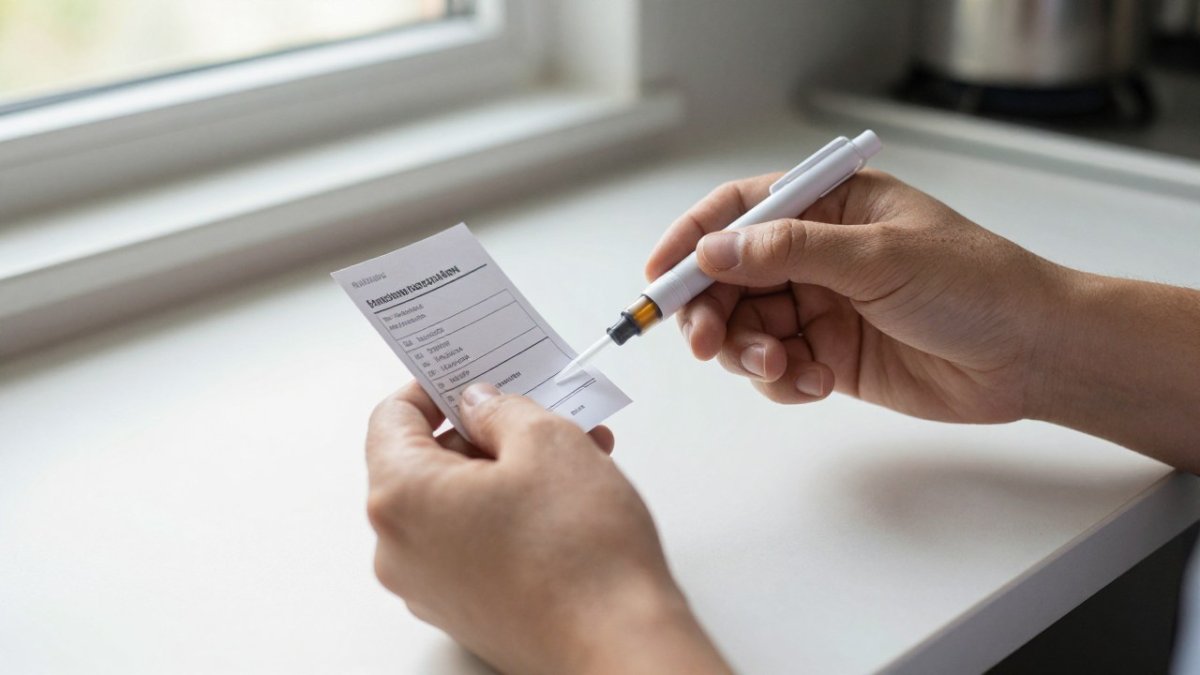
Find three numbers and write them down: your prescribed dose (usually in mg), the concentration on the vial (usually in mg/mL or mg per 0.5 mL), and the total volume in the vial. If the prescription says “5 mg weekly” and the vial says “5 mg/mL,” those are different numbers that happen to share a digit. Read them as separate facts.
Watch out: a label that reads “2.5 mg/0.5 mL” is the same strength as “5 mg/mL,” and mixing those two formats up is one of the most common sources of a doubled dose.
Step 2: Calculate the volume, not the units, first
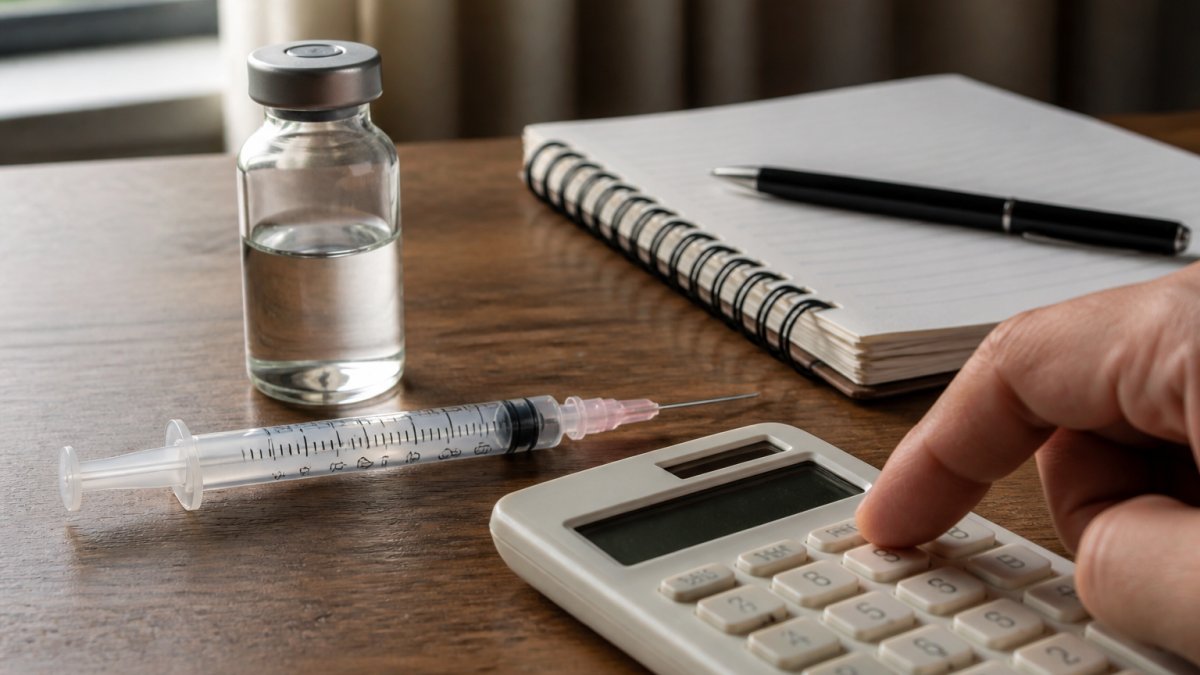
Divide the prescribed dose in mg by the concentration in mg/mL. For example, 5 mg divided by 5 mg/mL equals 1 mL. Do the math on paper or with a calculator, not in your head, and have your pharmacist check the result against your specific product. Keep the written calculation with your supplies so you are not re-deriving it from memory each week.
Step 3: Match the volume to your syringe’s markings
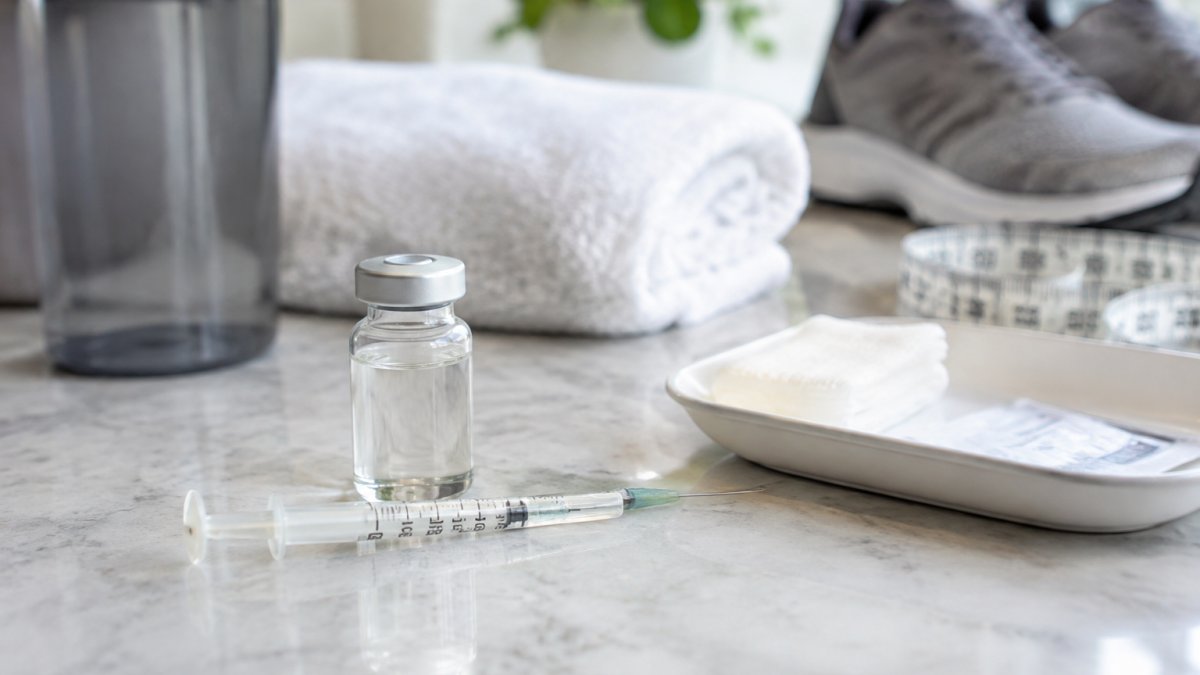
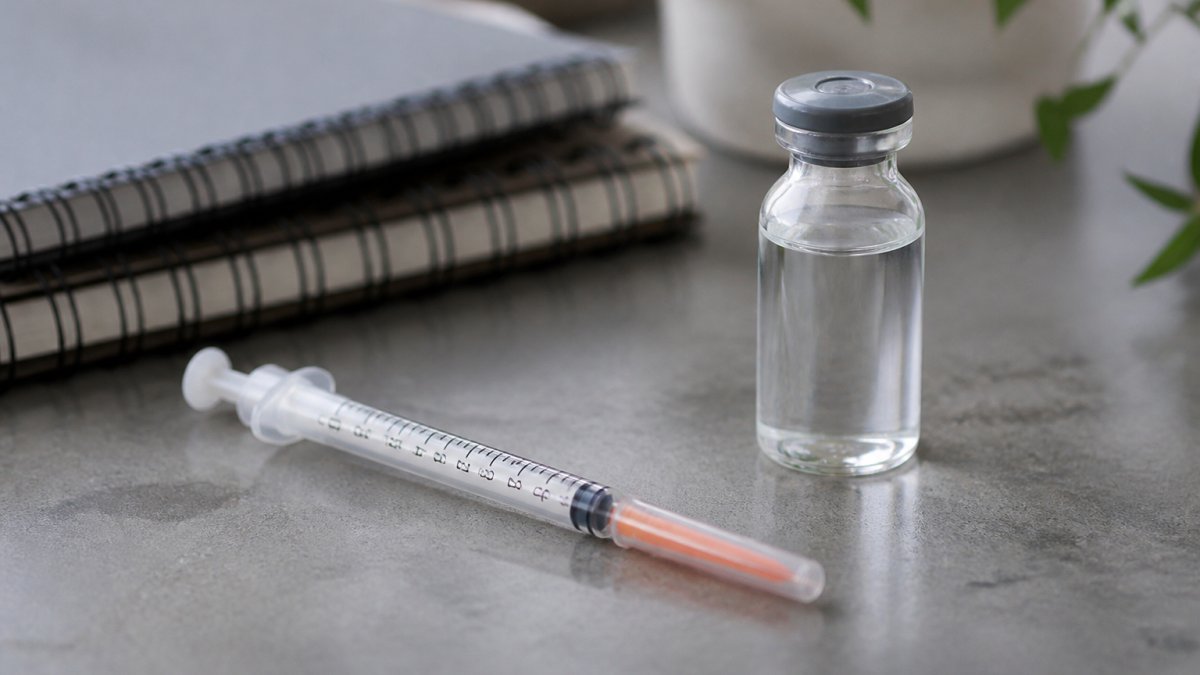
Syringes are marked in units, and the unit-to-mL relationship depends on the syringe. A U-100 insulin syringe holds 100 units per mL, so 1 mL equals 100 units on that syringe.
Watch out: if your calculation gives a volume larger than your syringe holds, stop. That usually means the concentration was misread or the wrong syringe was dispensed, and it is a reason to call the pharmacy rather than split the dose across two draws.
Step 4: Run a pre-injection checklist every time
Before the needle goes in, confirm each item out loud or on paper:
- The vial matches the medication name and concentration on your prescription.
- The prescribed dose in mg matches what you calculated.
- The syringe type (U-100, U-40, or other) matches what the calculation assumed.
- The plunger is at the line you intended, checked at eye level, not at an angle.
- The vial is not expired and has not changed appearance since last use.
- You have not already taken this dose today.
Step 5: Draw slowly and verify before injecting
Draw the dose, then pause and re-check the plunger against the line before attaching or inserting the needle. Air bubbles and thick liquid can make the meniscus sit above or below the mark, so read the top of the liquid, not the bubble. If the draw is off, discard it and start again rather than “topping off” into the same syringe.
Step 6: Log the dose and the concentration
Record the date, time, dose in mg, concentration on the vial, and volume injected. If a dosing error is ever suspected, that log is the fastest way for a clinician or poison center to reconstruct what happened.
Ask your pharmacist to walk through the conversion on your actual product and write it on a card you keep with your supplies.
Common Dosing Error Scenarios to Watch For
Watch for these situations, which appear in FDA reports and clinical case studies:
- Reading milligrams as milliliters, or the reverse
- Drawing to the wrong syringe mark, such as the 10-unit line instead of the 1-unit line
- Using a syringe marked for a different concentration
- Repeating a dose after forgetting whether the last one was given
- Switching to a new vial from a different pharmacy without rechecking the math
The article points to a handful of situations that show up repeatedly in FDA reports and case studies:
| Error scenario | Typical cause | What to do |
|---|---|---|
| Milligrams read as milliliters | Unit confusion | Check the label units before drawing |
| Drawing to the wrong syringe mark | Misreading the syringe scale | Confirm the line matches the calculated dose |
| Syringe for a different concentration | Mismatched syringe type | Verify the syringe matches the instructions |
| Repeating a dose | Forgotten last injection | Keep a dosing log |
| New vial from a different pharmacy | Concentration changed | Recheck the math on every new vial |
Tirzepatide Overdose Symptoms and Warning Signs
An overdose can cause severe nausea, repeated vomiting, abdominal pain, dehydration and fainting. Symptoms can appear within hours or days, depending on the dose. Some side effects, like mild nausea, are expected with these medications. The difference is intensity and persistence.
Reports of GLP-1 dosing problems rose after late 2022, according to a 2026 analysis Adverse events administering glucagon-like peptide-1 receptor agonists. Treat any unexplained, severe reaction as a reason to seek help.
What to Do If You Suspect a Dosing Error
The right next step depends on what happened and what you are feeling. Organize your response by situation rather than by a single checklist, and have the same information ready for whoever you call.
Have this information ready before you call
Write down or have in hand: the medication name, the concentration on the vial (mg/mL), the dose you intended, the dose you believe you took, the time it was taken, your syringe type, any symptoms and when they started, and the pharmacy and lot number. If someone else gave the injection, get their account of what was drawn. This is the information a prescriber, pharmacist, or poison center will ask for first.
If you injected too much but feel normal
Call your prescriber or pharmacist right away and describe the dose, concentration, and time. Contact Poison Help at 1-800-222-1222 for guidance on what to watch for. Do not take another dose until a clinician tells you to. Keep the vial, syringe, and label so the product can be checked. Symptoms of a GLP-1 overdose can be delayed, so “feeling fine” in the first hour is not a reason to skip the call.
If you have severe or worsening symptoms
Seek emergency care for fainting, repeated vomiting that prevents you from keeping fluids down, severe abdominal pain, chest pain, confusion, trouble breathing, or signs of dehydration such as dizziness on standing and very dark urine.
Watch out: severe vomiting and abdominal pain after a GLP-1 injection can also signal pancreatitis or gallbladder problems, which are not simply “too much drug” and need emergency evaluation rather than watchful waiting.
If you are unsure whether you already took your dose
Do not double up to be safe. Call your prescriber or pharmacist and describe your schedule and the last dose you are certain about. A missed dose is generally safer than a duplicated one, but the right answer depends on your specific medication and schedule, so let a clinician make that call.
If the error may have come from the pharmacy or prescriber
If the concentration dispensed does not match the prescription, the syringe type does not match the instructions, or the written directions are ambiguous, contact the dispensing pharmacy and your prescriber. Ask them to verify the concentration and the intended volume in writing. Report a serious reaction or a product problem to the FDA MedWatch program.
What not to do
Do not induce vomiting, do not take extra medication to “balance” a suspected error, and do not wait out clearly wrong doses to see if symptoms pass. Do not discard the vial or syringe before a clinician has had a chance to review them.
Booking a Medication Review at MedShape Weight Loss Clinics
If you are unsure about your dose or your injection method, a medical review can help. book a medication review with a clinician and bring your vial, syringe and dosing log so the team can check your conversion. You can ask the clinic team about your specific medication and dose. Contact the clinic directly for current information.
Frequently Asked Questions
Why can compounded GLP-1 dosing be confusing?
Compounded products are not manufactured to the same standards as FDA-approved drugs, so concentrations can differ between pharmacies and vials. A dose listed in milligrams may need to be converted into milliliters and then into syringe units, and each conversion is a point where mistakes happen. Regulators have reported dosing errors with compounded semaglutide, which is why careful, concentration-specific instructions from a prescriber or pharmacist matter.
What should I do if I accidentally take too much compounded semaglutide?
If you think you have taken more than prescribed, stop the next dose and contact your prescriber, pharmacist or a poison control center right away. If you have severe vomiting, fainting, trouble breathing, chest pain or signs of severe dehydration, call 911 or go to the nearest emergency department. Do not wait for symptoms to become severe before getting help, and bring the vial or pen with you so the product and concentration can be identified.
What are the signs of a tirzepatide overdose?
Symptoms reported after excessive GLP-1 doses can include severe nausea, repeated vomiting, abdominal pain, dizziness, fainting and dehydration, and low blood sugar may occur in some people. These symptoms can overlap with ordinary side effects, so the key difference is severity and persistence. Any significant or worsening symptom after a dose should be reviewed by a health care professional promptly, especially if you are unsure what dose you actually injected.
Who should I contact after a compounded GLP-1 dosing mistake?
Start with the prescriber who manages your treatment, since they can review your dose and adjust care. A pharmacist can confirm the concentration on your label and help check your conversion from milligrams to syringe units. For immediate or severe symptoms, call 911 or the Poison Help line at 1-800-222-1222, which connects callers to their local poison center. Keep the product packaging and a written note of the time and amount injected.